
Types of Grills: A Wholesale Buyer’s Guide to Choosing the Right Product Mix
Choosing a grill range is not simply deciding whether gas, charcoal, or electricity is “best.” For an importer, distributor, retailer, or private-label brand, the better question is which grill types match the customers, sales channels, price positions, and regulations in the target market.
A balanced assortment may combine convenient gas models, traditional charcoal cookers, compact electric units, and versatile kettle designs. Each product should give shoppers a clear reason to buy while keeping sourcing, certification, packaging, and after-sales support manageable.
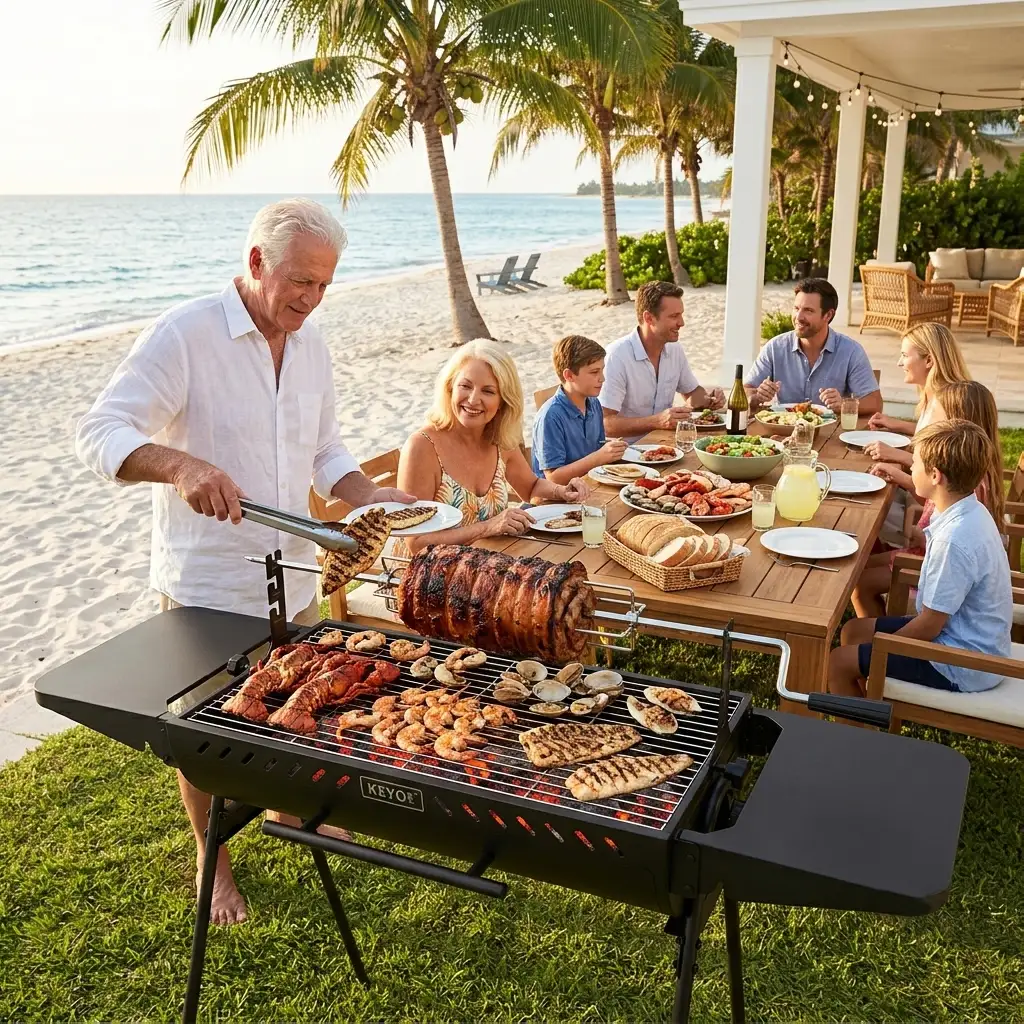
Grill Types at a Glance: Compare Fuel, Use Case, and Buyer Fit
| Grill type | Main customer value | Suitable market position | Key purchasing checks |
| Charcoal grill | Classic taste and direct heat | Yard, camping, enthusiast | Airflow, charcoal access, ash removal, stability |
| Gas grill | Fast lighting and separate heat zones | Family patio, regular use | Burner control, leak testing, ignition, storage |
| Electric grill | Easy use without keeping fuel around | City and small-space | Voltage, plug, power, temperature control |
| Kettle grill | Charcoal cooking in a round shape | Entry-to-mid-range outdoor retail | Bowl depth, lid fit, vents, cooking diameter |
Which Grill Types Fit Different Customer Segments?
Charcoal Grills: Traditional Cooking with Flexible Heat Control
Charcoal grills appeal to users who value outdoor cooking rituals, direct searing, and smoky flavor. The category can range from portable folding products to large trolley grills.
Helpful features focus on function rather than looks. A front charcoal door lets users add fuel without taking off the cooking grid. Moveable vents manage the air supply. Meanwhile, a movable charcoal tray changes the space between the fire and the food. Extras like warming racks, side tables, heat gauges, storage shelves, and pull-out ash trays can help justify a higher retail price.
Gas Grills: Fast Startup and Multi-Zone Convenience
Gas grills are great for people who cook often and prefer steady control. Separate burners let users make different meals at the same time. They can also set up direct and indirect heat spots easily.
Buyers need to check the burner setup, ignition quality, heat tracking, wheel strength, workspace, and cabinet doors. Gas models also need specific local checks. These include fuel type, regulators, hoses, joints, warning stickers, and safety tests. A standard approved for one country does not automatically work for another.
Electric Grills: A Practical Choice for Urban Consumers
Electric grills remove the need to store charcoal or gas cylinders. Straightforward controls, quick heating, grease collection, and compact storage make them relevant to e-commerce, apartment-living, and convenience-led assortments.
Still, electric does not mean it is allowed for every indoor room, balcony, or housing area. Buyers must align the voltage, frequency, plug, manual, and safety marks with the target market. Also, users must obey their local building and fire safety laws.
Kettle Grills: A Familiar Format with Broad Retail Appeal
The kettle style handles direct grilling, covered roasting, and indirect heat tasks well. Its lid and bowl hold the heat inside. At the same time, vents control the airflow.
Size acts as a strong sales tool here. Small versions appeal to campers and tiny homes. Larger cooking spaces fit big family parties. Pull-out ash catchers, sturdy legs, solid lid builds, and steel or cast-iron grates help separate similar-looking models.
How to Choose the Right Grill for Your Target Market
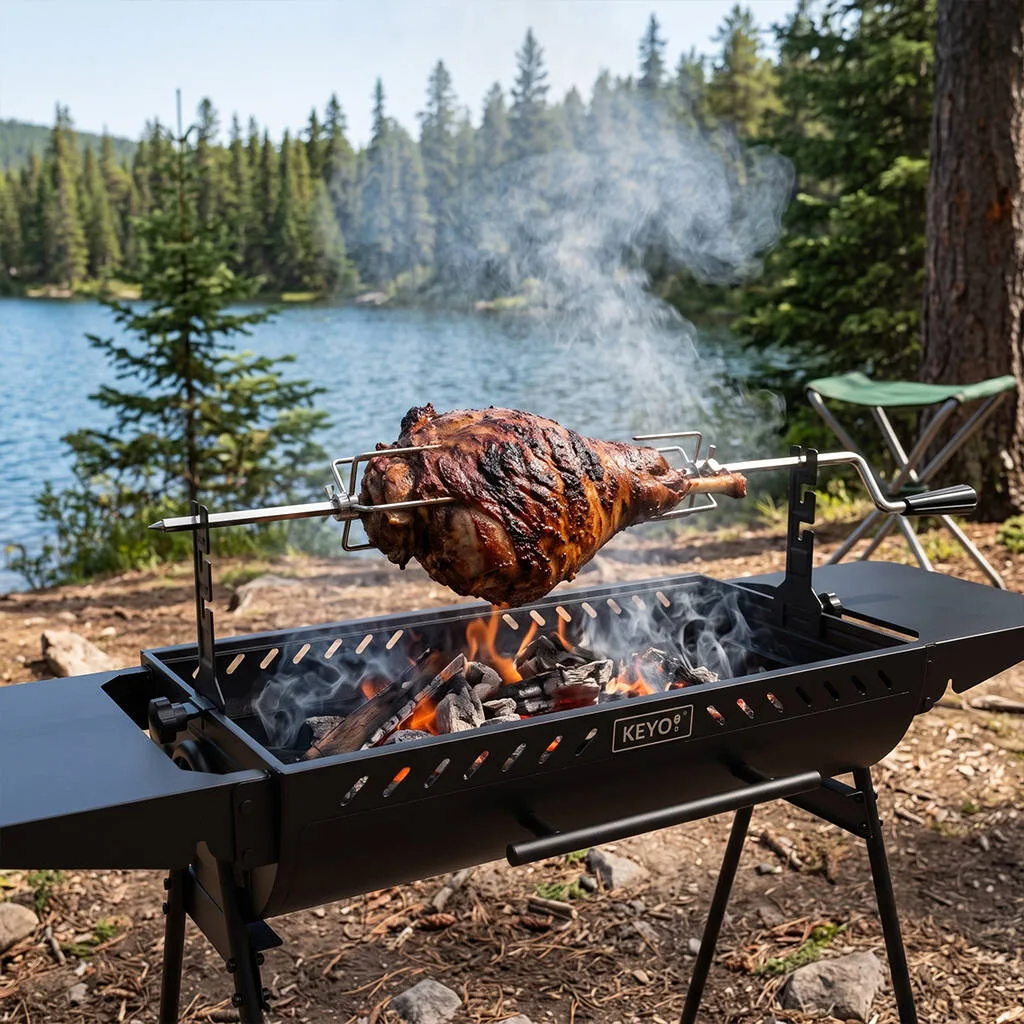
Match Products to Real Cooking Situations
Begin by looking at how the customer actually uses the grill, rather than just checking the fuel type:
1. Pick small electric or folding charcoal items for tight spaces and travel needs.
2. Choose multi-burner gas grills for regular family dinners and big food portions.
3. Use kettle grills for shoppers wanting a standard charcoal style with covered cooking options.
4. Offer large rolling charcoal carts with extra space, work areas, and heat settings.
Compare the Details That Influence Reviews and Returns
The cooking space is just one part of the choice. Retailers should also look at setup time, cooking height, handle spots, wheel rolling, cleaning ease, grease or ash trays, lid fit, paint quality, box strength, and spare parts.
These small points shape the user experience after the sale. A massive cooking grate will not stop bad reviews if the grill feels wobbly, takes hours to build, or is a pain to wash.
Use a Product-Mix Scenario Instead of Choosing One Winner
Think about a typical city store selling to apartment renters and suburban families. A tabletop electric grill meets the need for tight spaces. Next, a multi-burner gas model helps busy households seeking quick meals. A kettle grill handles the classic weekend barbecue crowd. Finally, a large charcoal cart can be sold online to save valuable shop floor space.
This mixed lineup works better than picking just one “best grill.” Each item fixes a specific problem, serves a unique channel, and hits a distinct price point.
What Wholesale Buyers Should Evaluate Before Ordering
Materials, Construction, and Quality Control
Check the steel grade, paint or enamel finish, food-safe parts, welding neatness, screw quality, grate metal, and rust resistance. You should test samples for balance, heat output, washing ease, assembly, packing, and repeated use.
For gas items, testing the spark, checking for leaks, and measuring heat output are vital steps. Inspection plans must clearly outline checks for raw materials, factory runs, and pre-shipping steps. They should also include any outside audit reports.
Compliance, OEM/ODM, and Packaging
Certification must match the product and destination. Depending on the project, relevant requirements may include EN 1860, LFGB or FDA food-contact standards, CE, UKCA, RoHS, REACH, or GS. Buyers should verify the scope for each model rather than treating a supplier-level certificate as universal approval.
OEM and ODM plans might include custom logos, colors, grates, body shapes, guidebooks, boxes, barcodes, stickers, and retail designs. Every shift should be checked for mold costs, MOQ limits, testing needs, and production delays.
MOQ, Capacity, Lead Time, and After-Sales Support
A full price quote should state sample dates, MOQ rules, factory timelines, busy-season output, payment methods, loading plans, extra parts, and shipping rules. A cheap unit price becomes very expensive if late shipping, flimsy boxes, missing pieces, or vague safety papers ruin a product launch.
At KEYO BBQ, we support product development, customization, manufacturing, quality control, packaging, and logistics. Our standard wholesale MOQ is 500 pieces; final quantities and schedules depend on the model and project.
Build a Market-Ready Grill Product Line with KEYO BBQ
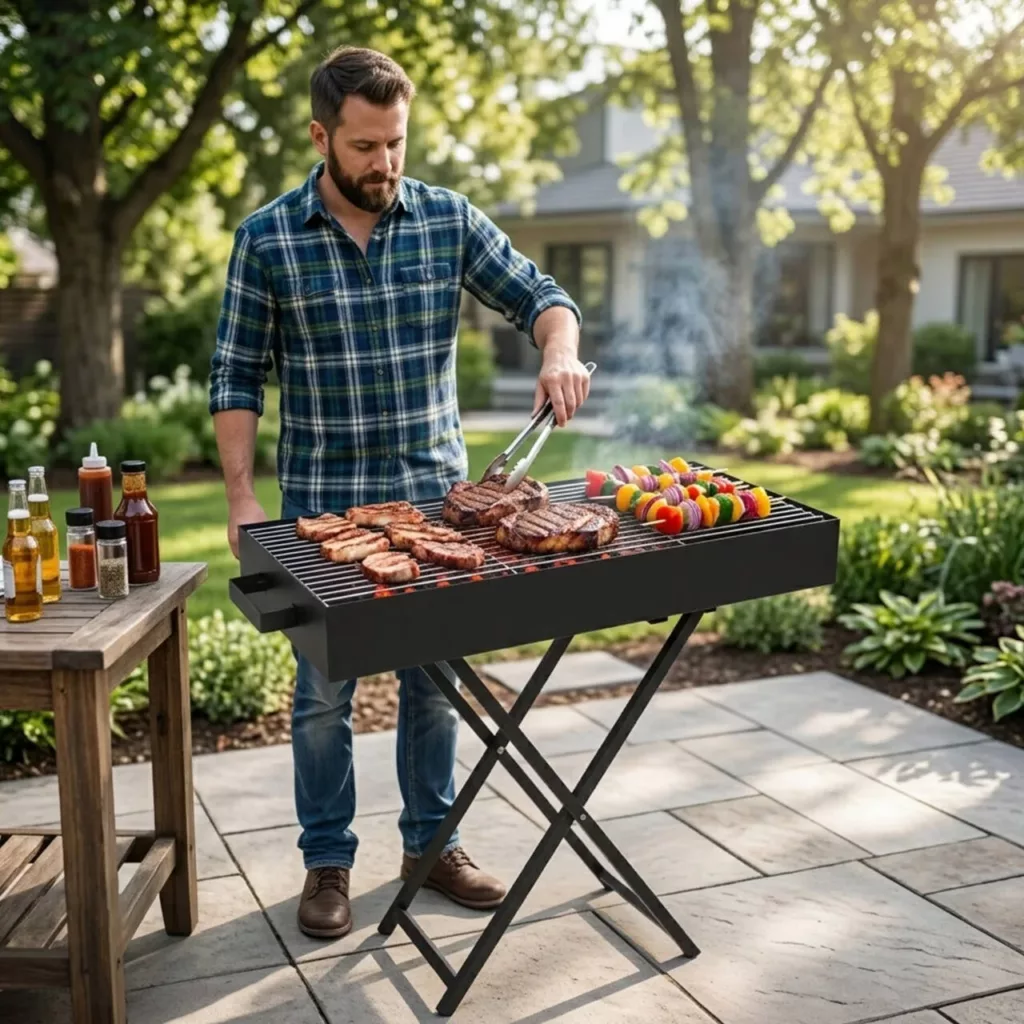
Our lineup allows buyers to compare proven items rather than just general categories:
| Model | Product type | Product size | Cooking area | Relevant features |
| PG07-070 | 22.5-inch kettle charcoal grill | 69 × 58 × 98 cm | 54 cm diameter | Adjustable vents, enclosed kettle form |
| FT01-070 | Adjustable charcoal grill | 156 × 61.5 × 119 cm | 74.8 × 47.6 cm | 14 cm height adjustment, front access |
| QL02-012 | Four-burner propane gas grill | 138 × 65 × 110 cm | 68 × 44 cm | Independent burners, gauge, cabinet, wheels |
| DD01-008 | Tabletop electric grill | 104.5 × 46 × 35 cm | 46 × 35 cm | 240V, 50/60Hz, 2000W |
The PG07-070 fits well into family-focused kettle collections. The FT01-070 provides a roomy cart layout and a movable space between the charcoal and the food. The QL02-012 handles multi-zone gas tasks smoothly. Meanwhile, the DD01-008 offers a neat tabletop option for convenience-driven areas.
As a KEYO BBQ wholesale partner, we guide buyers through item picking, branding, body changes, packing, testing, and shipping. Our resources include 400 skilled workers, 10 R&D professionals, 12 quality-control specialists, and a stated annual capacity of 2.4 million units. To receive a focused recommendation, buyers can provide their country, channel, quantity, price position, compliance needs, and customization plan.
FAQ
Q: What are the main types of grills for wholesale buyers?
A: The primary groups are charcoal, gas, electric, and kettle grills.
Q: Which grill type is best for small-space markets?
A: Electric and small charcoal items fit buyers with little room, depending on local laws. You should check sizes, storage ease, power needs, smoke output, open-fire bans, and where the grill will be used.
Q: What should I check when sourcing a wholesale gas grill?
A: Look at the fuel setup, burners, spark parts, regulator and hose rules, leak checks, heat output, safety stickers, certificate details, boxes, and spare parts. These rules must exactly match the final country.
Q: Can KEYO BBQ customize grills for private-label brands?
A: Yes. We offer OEM and ODM help for logos, boxes, paint colors, specific parts, guides, and store displays. The possible tweaks, mold fees, MOQ limits, testing steps, and timelines depend on the chosen model.
Q: What is the typical MOQ and lead time for wholesale grills?
A: Our standard MOQ is 500 pieces. Samples are generally listed at about seven days, while bulk orders are commonly planned around 30 to 45 days depending on season and project requirements. Final terms should be confirmed before ordering.