
Charcoal Grill vs Gas Grill: A Practical Guide
Choosing between a charcoal grill and a gas grill is not simply a question of which fuel is better. The right choice depends on cooking frequency, expected flavor, available space, and the level of fire control the user wants.
For retailers and private-label brands, the decision also affects product size, target price, maintenance expectations, and feature selection.
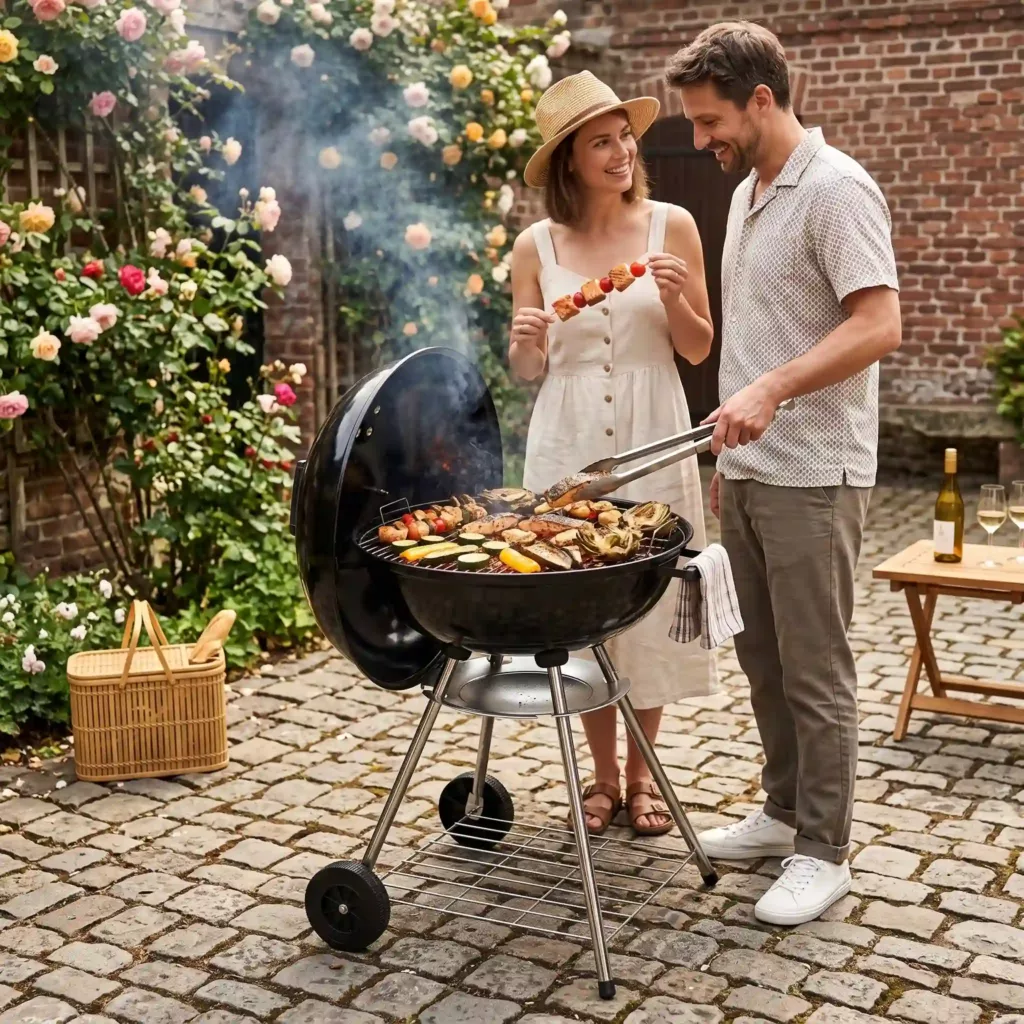
Charcoal Grill vs Gas Grill: The Quick Answer
| Buying factor | Charcoal grill | Gas grill |
| Flavor | Robust smoke character | Purer, more neutral taste |
| Startup | Needs lighting and preheating | Rapid ignition |
| Heat control | Fuel, distance, and airflow | Burner dials |
| Searing | Superb with clustered coals | Solid with proper burners and grates |
| Slow cooking | Great for indirect cooking | Handy; smoking might need add-ons |
| Cleanup | Ash disposal | Grease and burner upkeep |
| Portability | Numerous compact designs | Relies on size and fuel source |
| Best for | Classic BBQ fans | Regular outdoor cooking |
Select charcoal when smoke flavor, intense searing, and fire management are your top concerns. Pick gas when swift prep, consistent temperatures, and frequent use are your main goals.
The Key Differences That Affect Everyday Cooking
1. Flavor and Smoke
Charcoal generates smoke and combustion gases. These elements add to a distinct live-fire profile. When drippings reach hot coals, they can create additional aromatic smoke. Wood chunks may also be added during indirect cooking.
Gas burns with less residue. Because of this, the fuel adds less smoke. Flavor still develops from browning, spices, marinades, and melting fat. For burgers, veggies, or thin meats, thorough preheating can be just as vital as the fuel type.
2. Heat, Searing, and Cooking Versatility
A pile of charcoal can be grouped for direct heat. Alternatively, it can be pushed to one side for two-zone cooking. This setup makes a kettle or adjustable charcoal grill great for searing. It is also excellent for roasting and lower-temperature cooking when the lid is shut.
Gas grills form heat zones using separate burners. One section can stay very hot. Meanwhile, another section is turned down or completely off. This feature is very helpful when different foods need different heat levels.
3. Startup Speed and Temperature Control
Gas is easier when cooking needs to begin quickly. After ignition, users can adjust the flame without moving fuel or changing airflow.
Charcoal requires more preparation. Temperature depends on fuel quantity and position, the distance between food and coals, and vent settings. An adjustable charcoal tray, thermometer, or enclosed kettle lid makes this process easier to manage.
4. Purchase Price and Fuel Cost
Price varies by size, construction, burner count, cart design, and storage. Basic charcoal models are mechanically simpler, while larger gas units may include several burners, ignition systems, cabinets, and side tables.
Fuel cost should be judged locally. Propane, natural gas, lump charcoal, and briquettes fluctuate by region. Shoppers should figure out the cost per cooking session. They should not just guess that one fuel is always less expensive.
5. Cleaning, Maintenance, and Durability
Charcoal users have to clear out cold ash. They must also keep the air vents open. A detachable ash catcher cuts down on mess.
Gas users do not deal with ash. However, they must handle grease and check the burner holes. They also need to look after the ignition and gas parts. For both types, tough steel and heat-resistant coatings are vital. Sturdy frames, secure handles, and spare-part availability are also very important.
Which Grill Fits the Way You Cook?
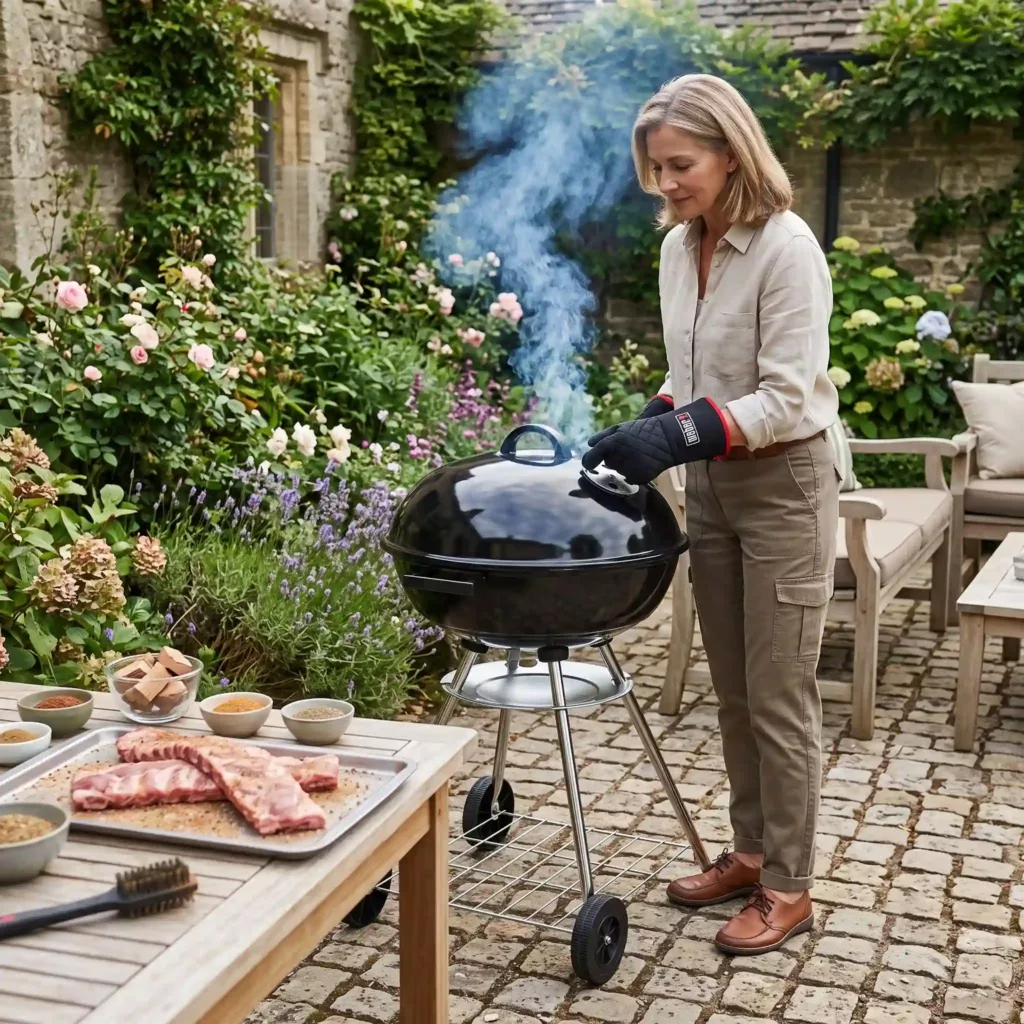
Best for Weeknight Meals and Frequent Grilling
Gas fits people who cook regularly and appreciate quick setup times. Separate burners make it simple to cook chicken, veggies, and burgers all at once. It also allows families to get steady results. They can do this without making a new fire for every dinner.
Best for Steak, Smoking, and Traditional BBQ
Charcoal fits chefs who love creating heat zones and tweaking airflow. A kettle grill can sear meat right over the coals. Then, it can finish cooking the food on the cooler side with the lid closed. Grills with adjustable heights offer another way to control heat. They do this by changing the gap between the food and the hot fuel.
Best for Small Spaces, Camping, and Beginners
A small kettle or folding charcoal grill is ideal when moving and storage are important. A compact gas grill might be simpler for novices. These beginners often like straightforward controls. People should review local regulations. Some apartments, campgrounds, and areas ban open flames or specific fuels.
Practical case:
- A family cooking twice a week might pick gas for quicker prep.
- A weekend fan learning indirect cooking might pick a kettle grill.
- A store catering to both groups might carry different lines or a dual-fuel model.
KEYO BBQ Product Examples and B2B Selection
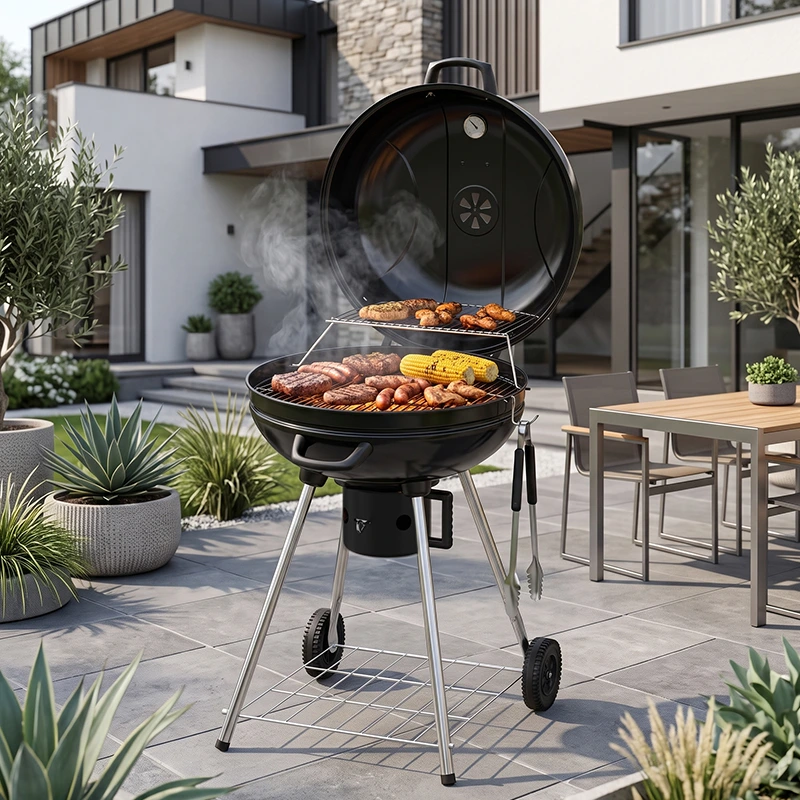
Charcoal and Kettle Options
At KEYO BBQ, model FT01-070 is a large iron charcoal grill. It measures 156 × 61.5 × 119 cm. It offers a 74.8 × 47.6 cm cooking space. It also features 14 cm of height adjustment. A front door for charcoal access, movable vents, and a thermometer help during use. A warming rack, a side table, and bottom storage aid extended cooking sessions.
Model PG07-070 is a 22.5-inch kettle grill. It measures 69 × 58 × 98 cm. It features a 54 cm diameter cooking zone. It includes adjustable air vents and a removable ash catcher. This design allows for direct grilling. It also handles covered, indirect cooking within a neat round shape.
Gas and Dual-Fuel Options
Model QL02-012 is a four-burner propane grill. It measures 138 × 65 × 110 cm. It comes with a 68 × 44 cm cooking area. Its burners can be adjusted separately. A heat gauge, storage cabinet, cool-touch handle, and wheels boost control and tidiness.
Model QL02-005 mixes gas and charcoal in one iron unit. It measures 196 × 64 × 130 cm and provides a 102 × 44 cm cooking space and a 51 × 44 cm charcoal tray. It has a 3+1 burner setup, side tables, and wheels. A heat-safe handle and bottom storage are also included.
As a BBQ Grill wholesale supplier, we back OEM and ODM projects. We help from product design through to making the goods and also handle quality checks, packing, and shipping. Furthermore, we aid with logo printing, structural tweaks, and design packaging for various markets and sales channels.
Final Decision Checklist
Before deciding, answer these five questions:
- Is a smoky taste or fast lighting more vital?
- Will the grill be used sometimes or multiple times a week?
- Is the main goal searing, slow cooking, varied-temperature grilling, or easy transport?
- How much washing and upkeep will the user tolerate?
- Does the market require charcoal, gas, distinct product lines, or a combined-fuel option?
The ideal choice is the grill whose cooking style, dimensions, and upkeep needs fit the user’s daily habits.
FAQ
Q: Is a charcoal grill or gas grill better for beginners?
A: Gas is generally easier. This is because lighting it and changing the heat are straightforward. A kettle grill can still work for beginners. However, they must be ready to learn about airflow and two-zone fire management.
Q: Does food taste better on a charcoal grill than on a gas grill?
A: Charcoal normally produces a richer smoke and live-fire taste. Still, spices, browning, cooking heat, and meat thickness also affect the final flavor.
Q: Which is cheaper to use, a charcoal grill or gas grill?
A: It depends on the grill setup and local fuel costs. It also depends on cooking time and how often you cook. You should compare overall gear and fuel expenses in the intended market.
Q: Is charcoal or gas better for steak and smoking?
A: Charcoal is great for intense searing heat. It is also perfect for smoke-enhanced indirect cooking. Gas offers simpler temperature tweaks. It provides handy, consistent steak cooking.
Q: Can a gas and charcoal dual-fuel grill replace two separate grills?
A: Yes, it can offer both cooking styles in a single device. The downsides are a bigger size and more parts. It also requires more upkeep than a simple single-fuel grill.