
Electric Grill Guide: Performance, Safety, and Sourcing for Retailers
Electric grilling is no longer only an alternative to charcoal or gas. For retailers, importers, distributors, and private-label brands, the category addresses compact living spaces, simpler operation, fuel restrictions, easier cleanup, and demand for convenient outdoor cooking.
A successful assortment cannot be selected by appearance or wattage alone. Buyers need to evaluate power supply, cooking area, temperature control, grease collection, mobility, materials, intended use, compliance, packaging, and supplier capability. This guide explains those factors.
Why Are Electric Grills Becoming a Strategic Product Category?
Which Customer Problems Do They Solve?
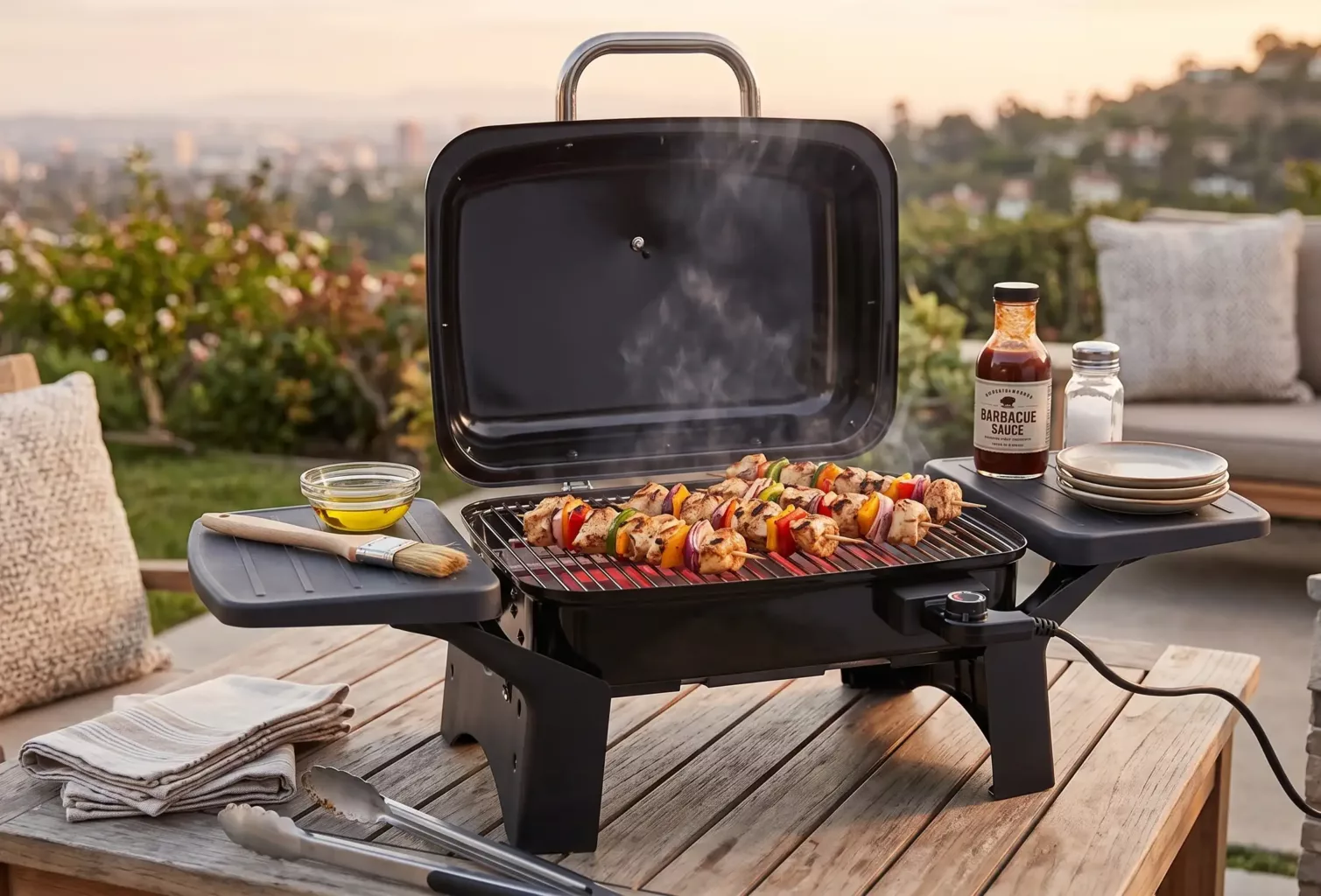
An electric BBQ eliminates the hassle of storing charcoal or gas cylinders. Users simply plug the device into a proper power supply. They preheat it and adjust the cooking temperature using a control switch. This setup works perfectly for small households and first-time grill users. It also appeals to urban consumers and shoppers seeking reliable, predictable operation.
This category also lowers typical hurdles associated with grilling:
1. Buying and storing fuel becomes much simpler.
2. Starting the grill requires no fire-lighting skills.
3. Grease trays make post-cooking cleanup much easier.
4. Compact models fit nicely on balconies, patios, and small gardens. They are also ideal for limited storage.
5. Regulated electric heat helps reduce flare-ups when compared to exposed flames.
Electric cooking does not make every product suitable for every indoor or balcony environment. Users must follow the instructions and check building rules, outlet capacity, ventilation, weather exposure, and required clearances.
Where Is Demand Most Relevant?
Electric grills show strong relevance in markets featuring high apartment density and smaller households. They also thrive where convenience is prioritized or open flames face restrictions. These products can enhance a retailer’s existing charcoal and gas lines rather than replacing them completely.
A sensible product mix might feature a tabletop grill for tight spaces. It could also include a stand-format outdoor electric BBQ for shoppers wanting a classic patio arrangement. This strategy provides buyers with clear merchandising messages. It avoids treating every electric cooking device as the same item.
What Performance Specifications Actually Matter?
Power, Voltage, and Heat Control
Wattage shows the electrical input, yet it does not define the entire cooking experience. Buyers must evaluate it alongside voltage and frequency. The layout of the heating element, cooking-surface size, lid design, and control method are also essential.
A 2000W appliance may support fast heating, but performance also depends on how efficiently heat reaches and remains around the cooking surface. For international sourcing, voltage and frequency must match the destination market. Plug type, cable requirements, labeling, and test documentation should be confirmed before mass production.
Cooking Area and Product Dimensions
The cooking area impacts user capacity and retail shelf placement. A seemingly compact device might still demand substantial counter depth. Meanwhile, a stand model requires proper floor space and a stable foundation.
The following KEYO BBQ configurations demonstrate how an identical 46 × 35 cm cooking area serves distinct use cases:
| Product | Product size | Cooking height | Cooking area | Power | Material |
| DD01-008 portable tabletop electric grill | 104.5 × 46 × 35 cm | 23 cm | 46 × 35 cm | 240V, 50/60Hz, 2000W | Iron |
| Outdoor stand-format electric BBQ | 71.5 × 46 × 96 cm | 83 cm | 46 × 35 cm | 240V, 50/60Hz, 2000W | Iron |
The tabletop version stays low and is built for tight placement. In contrast, the outdoor setup lifts the cooking surface to an 83 cm working height. Retailers can thus address different tastes without altering the primary cooking-area promise.
Grease Management and Everyday Usability
For many shoppers, ease of use offers a more compelling selling point than absolute maximum heat. A thoughtfully designed device should ensure that adjusting temperatures, handling, moving, and cleaning are straightforward tasks.
The outdoor KEYO BBQ setup features wheels, heat-resistant handles, a rotary power dial, and a grease collection tray. Model DD01-008 incorporates a rotary power switch, a built-in lid thermometer, and a stainless steel cool-touch handle. These specific elements provide sales teams with concrete advantages to highlight. This is far better than relying on vague statements like “easy to use.”
Which Electric Grill Design Fits Each Customer Segment?
Tabletop Electric Grills for Compact Spaces
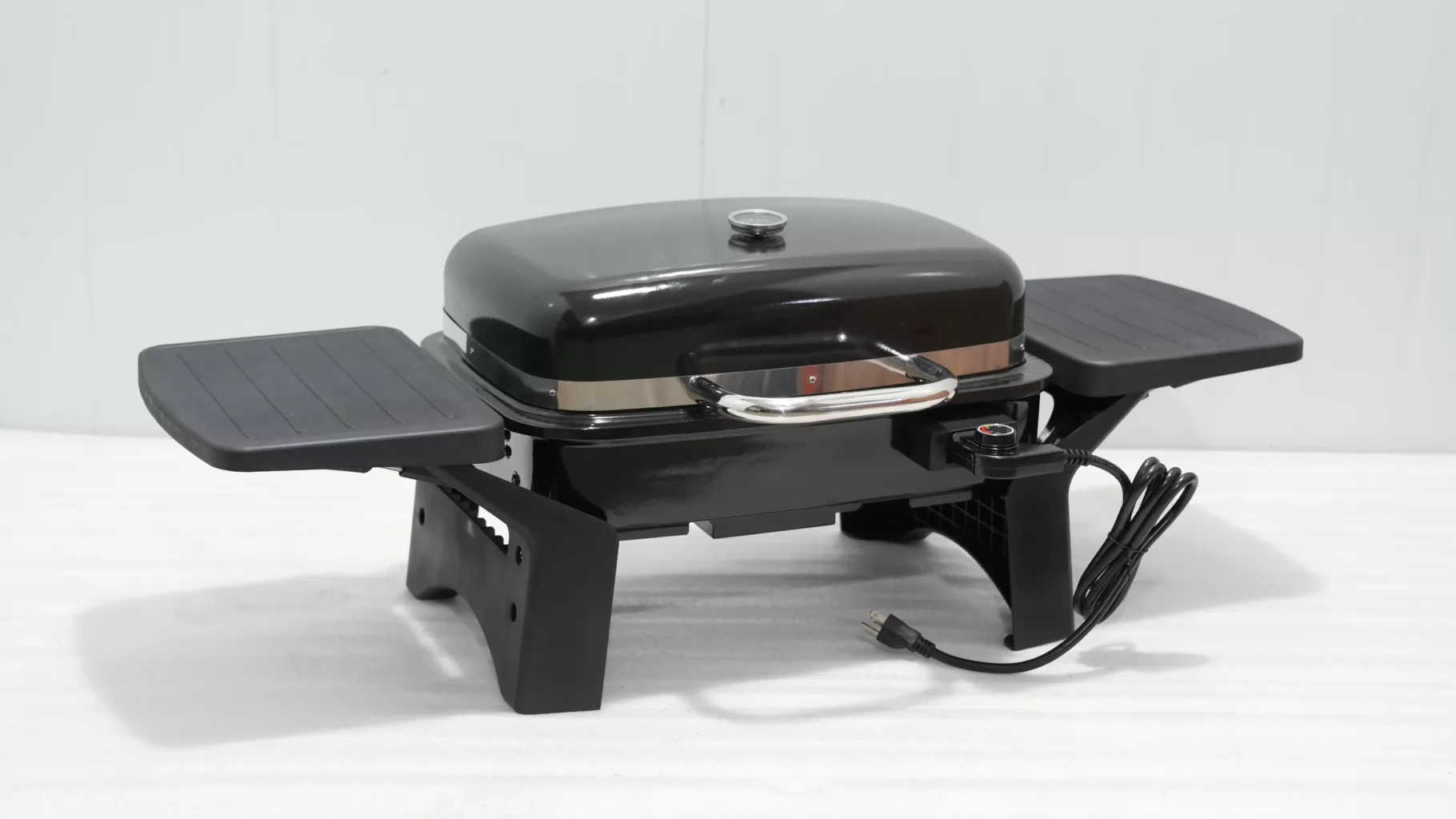
Model DD01-008 targets families, small parties, and users seeking a portable, table-height layout. Its 46 × 35 cm cooking area provides usable space, while the 23 cm cooking height keeps the unit low-profile.
For retailers, this style fits well in e-commerce channels, home-appliance departments, and seasonal campaigns. It is great for buyers with limited storage. Product pages must display the full dimensions and electrical ratings. They should also detail suitable placement, cleaning methods, and surface requirements.
Stand Electric Grills for Patios and Gardens
The outdoor configuration boasts a total height of 96 cm and a comfortable 83 cm cooking height. Wheels allow easy movement across a patio or garden. Meanwhile, the grease tray makes maintenance after cooking much simpler.
This style appeals to buyers who desire the visual impact and working height of a standard outdoor barbecue, yet favor electric power. Marketing should focus on convenience, mobility, controlled heating, and fuel-free preparation. It should not be portrayed as identical to charcoal grilling.
What Safety, Compliance, and Quality Questions Should Buyers Ask?
Electrical and Destination-Market Requirements
Before ordering, buyers should confirm the standards and documentation required in the sales market. Electrical safety, food-contact materials, plug configuration, voltage, frequency, labels, user manuals, packaging marks, and warning language may vary by country and model.
At KEYO BBQ, we maintain strict quality and environmental management systems. We actively support compliance efforts for global markets. The scope of certification must be verified against the exact electric grill, its configuration, and the final destination. It should never be assumed that one certificate covers an entire product category.
Product Validation Before Mass Production
A rigorous approval routine should transition from specification reviews to actual physical validation. Buyers must closely inspect:
1. Overall product dimensions and the actual usable cooking area
2. Heating performance and temperature-control accuracy
3. Handle temperatures and general operating ergonomics
4. Base stability, smooth wheel movement, and ease of assembly
5. Grease collection efficiency and cleaning accessibility
6. Quality of materials, finishes, labels, manuals, and packaging
7. Carton durability and overall shipment preparation
Sample approval is important when a project includes custom branding, packaging, colors, structural changes, or market-specific electrical components.
How Should Retailers Choose an Electric Grill Manufacturer?
At KEYO BBQ, we provide one-stop OEM and ODM support covering R&D, customization, manufacturing, quality control, packaging, and logistics. Our operation includes production teams, R&D specialists, quality-control staff, warehouse capacity, and support for international bulk orders.
As a BBQ grill wholesale supplier, we work with buyers on logo application, tailored product design, and custom packaging. The standard wholesale MOQ is 500 pieces, although flexibility may be discussed for selected products or higher-value orders. Sample and bulk lead times should be confirmed for the specific project and season.
Illustrative Case Study: Building an Urban Retail Assortment
Imagine a retailer catering to apartment dwellers and small families. Rather than introducing several nearly identical items, the buyer could develop a two-tier selection:
*DD01-008 serves as the tabletop choice for shoppers who value easy storage and flexible placement.
*The outdoor stand-format electric BBQ caters to patio owners wanting an upright cooking height and wheeled mobility.
The retailer can separate listings based on use cases, dimensions, setup processes, and cleaning designs. This approach minimizes internal product overlap. It provides customers with a distinct reason to select one format over the other.
A solid sourcing choice merges product-market fit with verified specifications and compliance readiness. It also demands high packaging quality, stable production, and clear communication throughout the entire order process.
FAQ
Q: Are electric grills worth stocking for retailers?
A: They prove highly valuable in areas where shoppers seek convenient operation and compact designs. They offer easier cleanup and serve as a great alternative to storing charcoal or gas. Retailers must align dimensions, pricing, electrical needs, and intended usage with local market demand.
Q: What wattage is suitable for an outdoor electric grill?
A: Wattage must be analyzed alongside voltage, frequency, and cooking area. Heating-element design, lid construction, and the control system also matter. The KEYO BBQ models detailed here utilize 240V, 50/60Hz, 2000W setups.
Q: Can an electric grill be used on an apartment balcony?
A: It depends on the instructions, building policy, local rules, outlet suitability, ventilation, clearance, and weather protection. Electric operation does not automatically make a grill acceptable in every apartment setting.
Q: What should buyers check before ordering private-label electric grills?
A: Confirm the model, dimensions, power rating, voltage, frequency, plug, materials, cooking area, controls, safety documents, logo position, packaging, manual, MOQ, sample approval, lead time, inspection method, and shipping terms.
Q: What OEM/ODM support does KEYO BBQ provide?
A: We facilitate product development, full customization, manufacturing, and strict quality control. We also manage packaging and logistics. Buyers can review logo designs, custom packaging, and unique product layouts with our project team before sampling and mass production.