
How 2026 Innovative Grill Designs Transform Outdoor Cooking
The Evolution of Grill Design: Meeting Modern Outdoor Cooking Needs
Outdoor cooking has moved from basic open flames to rich cooking experiences. Grill design changes match rising buyer needs for both ease and real flavor. Buyers and commercial users check gear for strong heat hold, smart fuel use, and flexible cooking surfaces. Clear knowledge of these build and function updates helps buyers pick tools that fit backyard spaces, patio sizes, or catering work.
Classic charcoal grills deliver true smoky taste and solid heat spread. Fresh engineering adds better airflow setups and movable grates that improve temperature handling. These updates turn a simple kettle into a steady cooking tool. At the same time, flat top griddles grow popular. These griddles give wide, smooth areas good for eggs, pancakes, or fajitas next to burgers and steaks. Putting several cooking styles into one unit marks real progress in outdoor cooking gear. Users gain the chance to combine outdoor kitchen pieces in one place.
Key Innovations in Commercial and Residential BBQ Equipment
Current barbecue gear adds many build updates that ease cooking steps and pull out more flavor. Tools once found only in restaurant kitchens now appear in home models. These tools give strong control over the whole grilling space.
Precision Heat Control and Dual-Fuel Systems
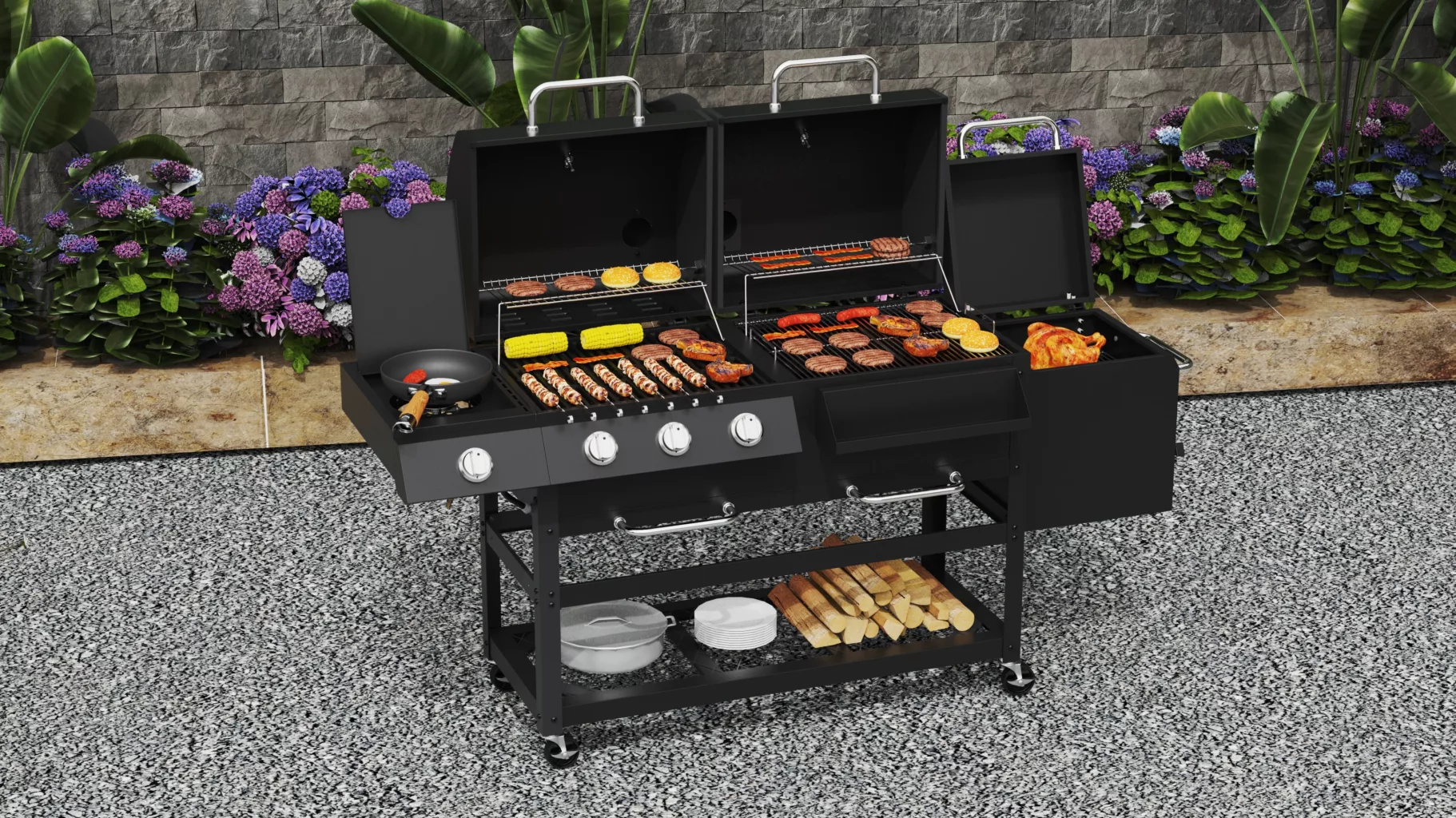
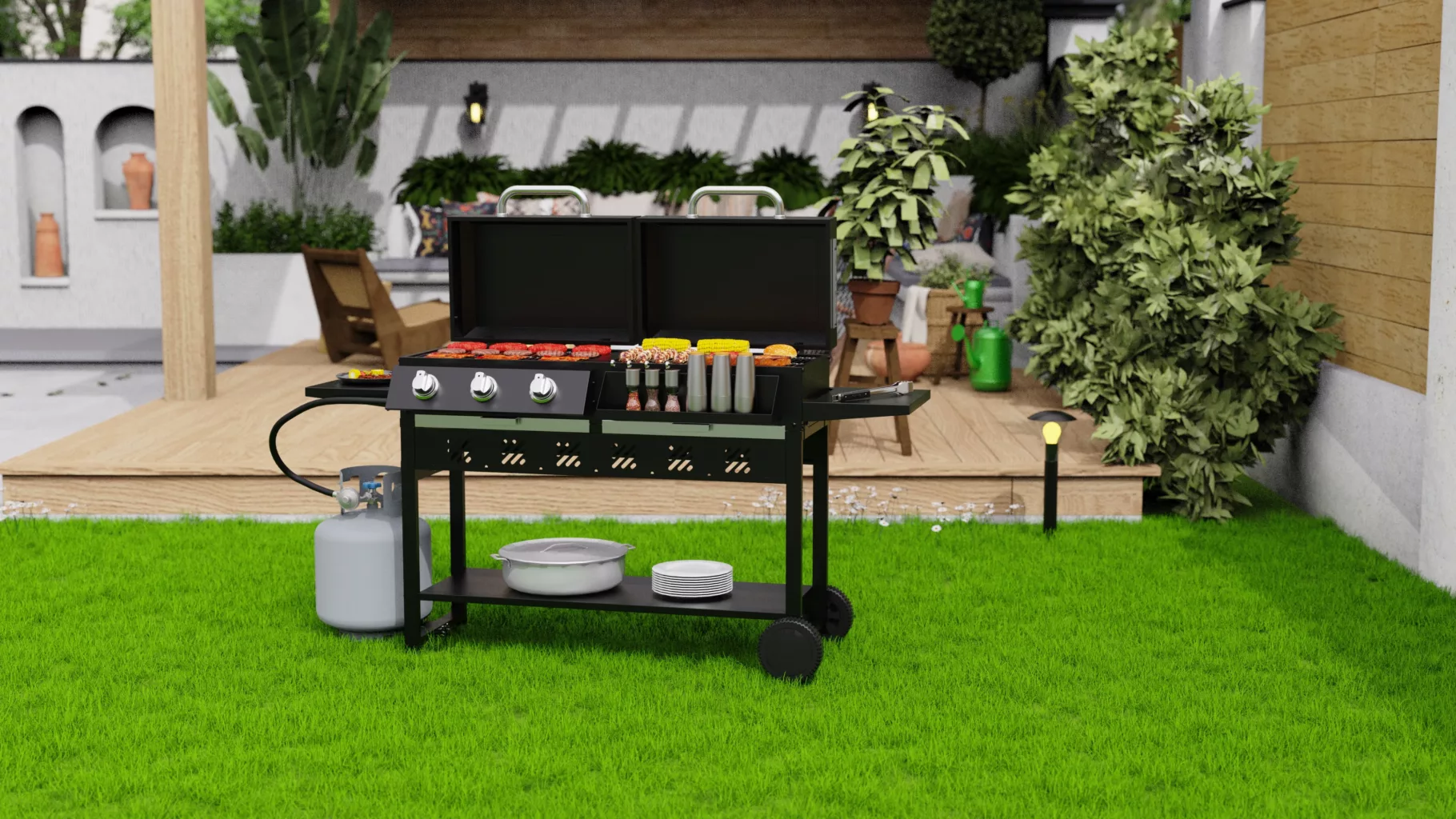
When sourcing advanced outdoor cooking solutions, partnering with a reliable wholesale supplier ensures access to state-of-the-art dual-fuel technology. Dual-fuel systems let users move between fast gas heat and a deep smoky taste from charcoal. One clear choice is the Combo Gas And Charcoal Grill Dual Fuel BBQ Combination. This unit uses a 3+1 burner layout for steady heat across a large 102 by 44 cm cooking space. The full unit measures 196 by 64 by 130 cm. Two chimneys and a lid thermometer sit on the unit. Operators watch inside temperatures closely without lifting the lid. This dual-fuel gear supports many cooking styles from quick searing to slow smoking in one area. An adjustable charcoal tray adds further control. Users raise or lower the fuel tray to match the needed heat levels for different meat cuts.
Structural Enhancements for User Convenience
Outside build changes also focus on daily ease. Many charcoal grills now offer different lid styles. A loose lid gives easy lift and move for quick access. This style helps users who handle several tasks at once. A single-piece lid keeps heat even and holds moisture inside. This style works well for slow roasting. Support features have also improved. A three-leg grill stands firm on rough ground and suits camping or beach use. A four-leg grill gives extra balance for bigger surfaces and longer cook times.
Evaluating Materials and Construction for Longevity
Grill life depends on the materials used in production. Strong parts resist weather and support good heat performance during use.
Advanced Coatings and Sustainable Manufacturing
Long life and green production matter more each year. Makers such as KEYO BBQ meet these needs with careful material choices and solid build steps. Buyers gain lasting value when they pick gear made from top materials. Good models use high-quality cold-rolled steel plates finished with black enamel coats. These coats handle heat above 1000 degrees Celsius. The enamel layer stops rust and keeps the frame strong over many seasons. One example is the 22 Inch Round Kettle Grill Charcoal BBQ model. This model uses iron with a deep body that holds heat steady for thick cuts or whole birds.
Beyond material selection, sustainable manufacturing processes play an important role in modern supply chains. Advanced facilities set up wastewater treatment systems on site. Wastewater treatment systems collect 100 percent of the wastewater. Wastewater treatment systems ensure discharge meets all compliance standards. Facilities achieve this goal without any third-party help. Core internal processes cover coagulation, sedimentation, air flotation, biochemical treatment, and multi-stage filtration. Strong environmental capabilities keep supply chains stable. Supply chains stay free from issues caused by sudden environmental policy shifts. Strong environmental capabilities support ongoing product availability.
How to Choose the Right BBQ Equipment for Your Market
Picking the right outdoor cooking gear needs a clear plan based on fuel type, space size, and cooking goals. Side-by-side checks help match models to buyer needs.
| Grill Category | Primary Fuel | Best Suited For | Notable Advantages |
| Charcoal Kettle | Charcoal | Traditional slow smoking and searing | Superior heat retention and authentic smoky flavor |
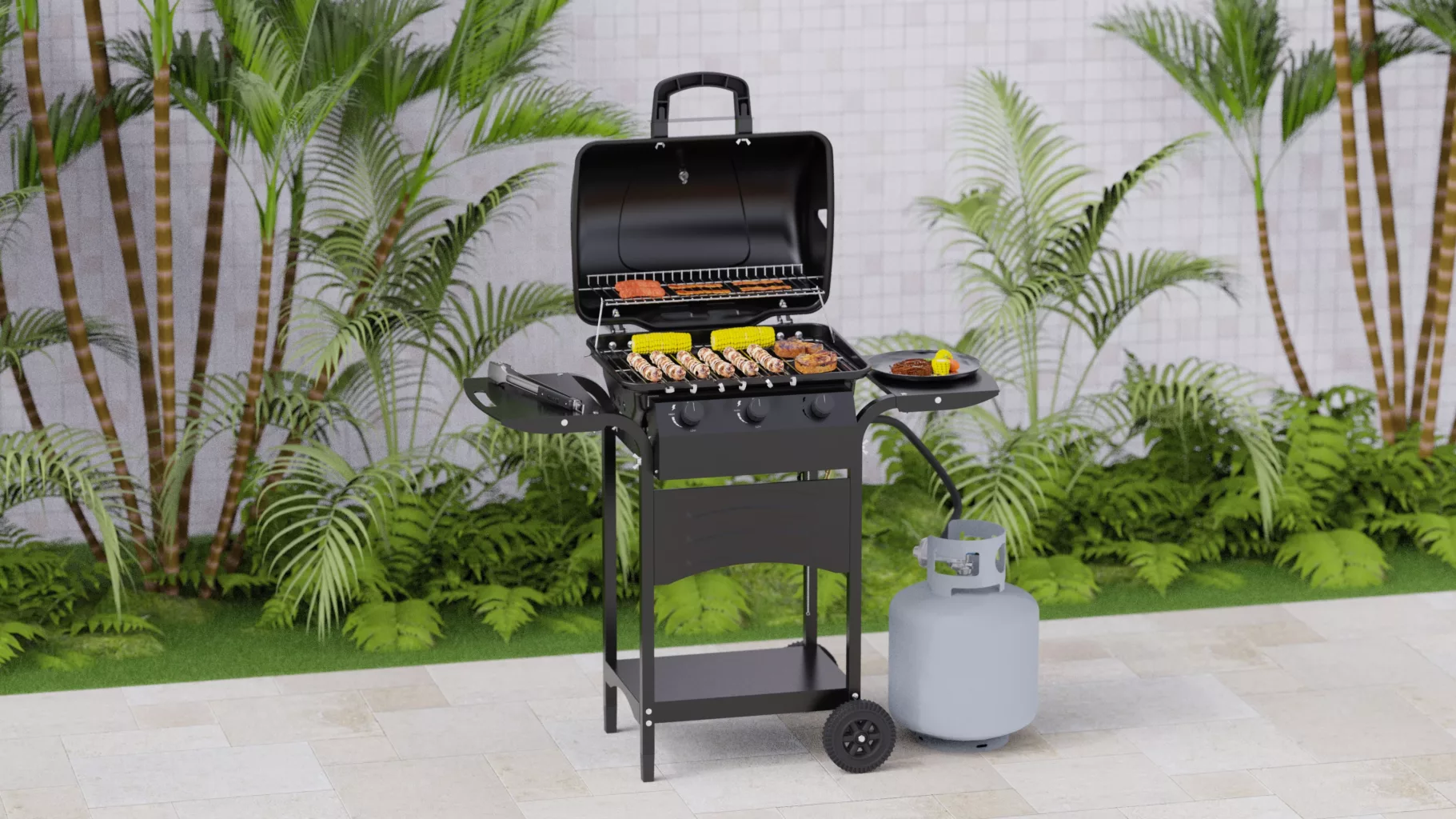
| Gas Barbecue | Propane or Natural Gas | Quick weeknight meals and large gatherings | Fast ignition and independent burner control |
| Flat Top Griddle | Gas | Breakfast foods, vegetables, and smash burgers | Uniform heat distribution and integrated grease catchers |
| Dual Fuel Combo | Gas and Charcoal | Enthusiasts requiring maximum versatility | Combines quick gas heating with charcoal flavor |
Buyers should review several practical points to match gear with their outdoor space.
1. Check cooking area size. Small models such as the 14 inch kettle grill fit camping needs with a 34 cm cooking diameter and light weight. Large patios or events need bigger units such as the 4 burner gas grill with a 68 by 44 cm surface and 128000 BTU output.
2. Look at airflow and temperature controls. Gear with movable vents and lid thermometers supports steady airflow and limits flare-ups.
3. Review cleaning features. Removable ash pans in charcoal models and grease trays in gas griddles cut cleaning time. Built-in oil collectors catch drips and protect the finish.
4. Consider movement needs. Backyard setups that shift often benefit from carts with strong wheels that roll smoothly on concrete or wood decks.
Frequently Asked Questions
Q: How do I choose between a standalone griddle and a grill-griddle combo?
A: Choice depends on cooking style and space limits. A standalone flat top griddle gives a wide, smooth area with even heat. This surface handles breakfast items, fajitas, and seafood without food falling through. A grill-griddle combo adds both open grate and flat areas in one frame. Users switch between searing steaks and cooking eggs on the same unit.
Q: What are the main differences between natural gas and propane BBQ grills?
A: Natural gas grills connect to a home gas line for a steady supply. These grills suit fixed patio spots and lower running costs. Propane grills use portable tanks. These grills heat fast and move easily across patios, balconies, or campsites.
Q: How does a gas grill griddle combo work?
A: A gas grill griddle combo brings together two different cooking surfaces. Gas burners supply power to both surfaces inside one frame. A cook turns on the burners below the grated section. High heat sears meats and creates classic grill marks. The cook uses the flat griddle section to prepare vegetables or eggs at the same time. Heat reaches every part of the griddle evenly. The design stops any need for carrying food back to an indoor kitchen.
Q: What maintenance is required for a flat top gas grill?
A: Maintaining a flat top gas grill works well through proper use of the grease management systems in the grill. Current designs feature a waste oil collector. The collector sits at the bottom or side of the unit. The collector catches drips and extra fats as cooking goes on. The collector avoids any grease build-up. Routine upkeep calls for emptying the collection tray. Routine upkeep also calls for gentle scraping of the cooking surface to clear food bits. Routine upkeep finishes with a thin layer of cooking oil. The layer maintains the non-stick quality and shields the metal from rust.
Q: Why is an adjustable charcoal tray height important for outdoor grilling?
A: Adjustable tray height gives direct control over cooking temperature. Raising the tray brings charcoal close to the grate for strong, direct heat and fast searing. Lowering the tray creates gentle indirect heat suited for thick cuts or whole vegetables without burning the outside.