
What Is an Electric Grill? Types, Benefits Guide
Electric grills use an electrically powered heating element instead of charcoal or gas. Electric grills provide a simple startup, along with adjustable heat plus easier cleanup. Such benefits suit electric grills well in small homes, plus balconies, plus patios, plus outdoor retail ranges. Electric grill types cover countertop units, wheeled outdoor grills plus enclosed smokers suited to slower cooking.
Choosing the right format requires more than comparing appearance. Buyers should consider the cooking environment, power, usable surface, grease control, portability, electrical standards, and target-market requirements.
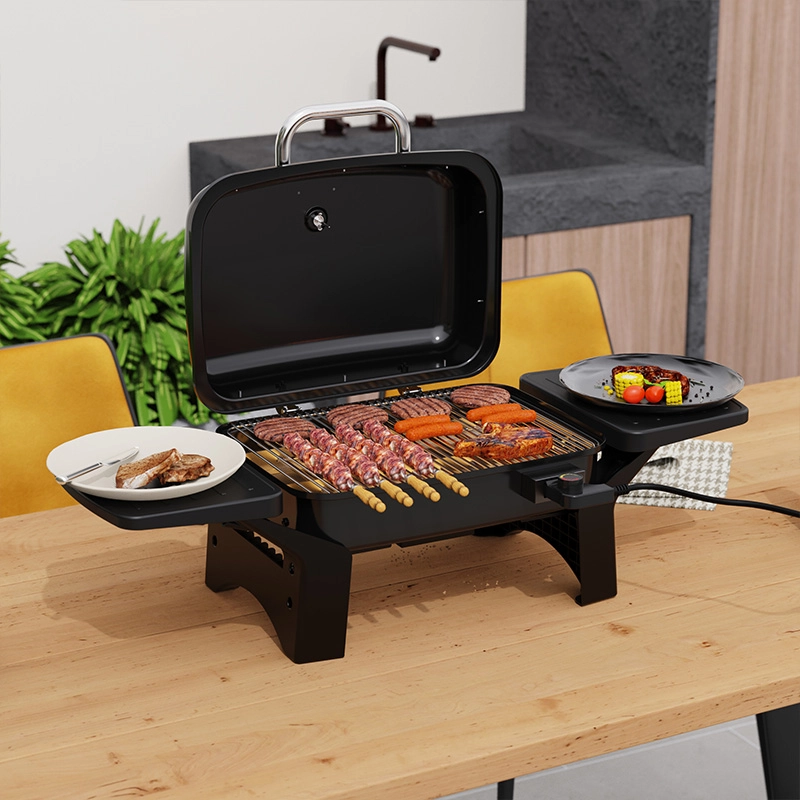
What Is an Electric Grill and How Does It Work?
Core Components: Heating Element, Cooking Surface, Thermostat, and Drip Tray
The heating element converts electrical energy into heat. Then the element transfers the heat to a grate, plate, or enclosed chamber. A thermostat or rotary controller regulates power. This regulation helps the appliance maintain steadier heat than an uncontrolled open flame.
Four parts shape most designs:
- The heating element determines heat-up speed and available power.
- The cooking surface affects browning, food contact, and cleaning.
- The thermostat or controller manages temperature consistency.
- The drip tray collects grease before the grease reaches hot components.
Lidded models may also include a thermometer. Mobile outdoor units can add stands, wheels, and heat-resistant handles.
How Electric Heat, Temperature Control, and Grease Management Affect Cooking
Performance depends on the distance between the element and the food. Performance also depends on the mass of the cooking surface. In addition, performance depends on whether a lid retains heat. A high-power unit may preheat quickly. A heavier plate can recover temperature more steadily after cold food is added.
Grease management is equally important. Fat or sugary marinade touching a hot element can create smoke, odors, and residue. A well-positioned collection tray reduces this contact. The tray also simplifies cleanup. Users should empty the tray regularly. Users should follow the intended indoor or outdoor use stated for the appliance.
What Are the Main Types of Electric Grills?
| Format | Main advantage | Key point to check |
| Tabletop | Easier storage | Stable, heat-safe surface |
| Stand grill | Comfortable outdoor setup | Wheels, balance, and weather exposure |
| Enclosed smoker | Longer controlled cooking | Chamber capacity and ventilation |
Tabletop Electric Grills for Compact Spaces
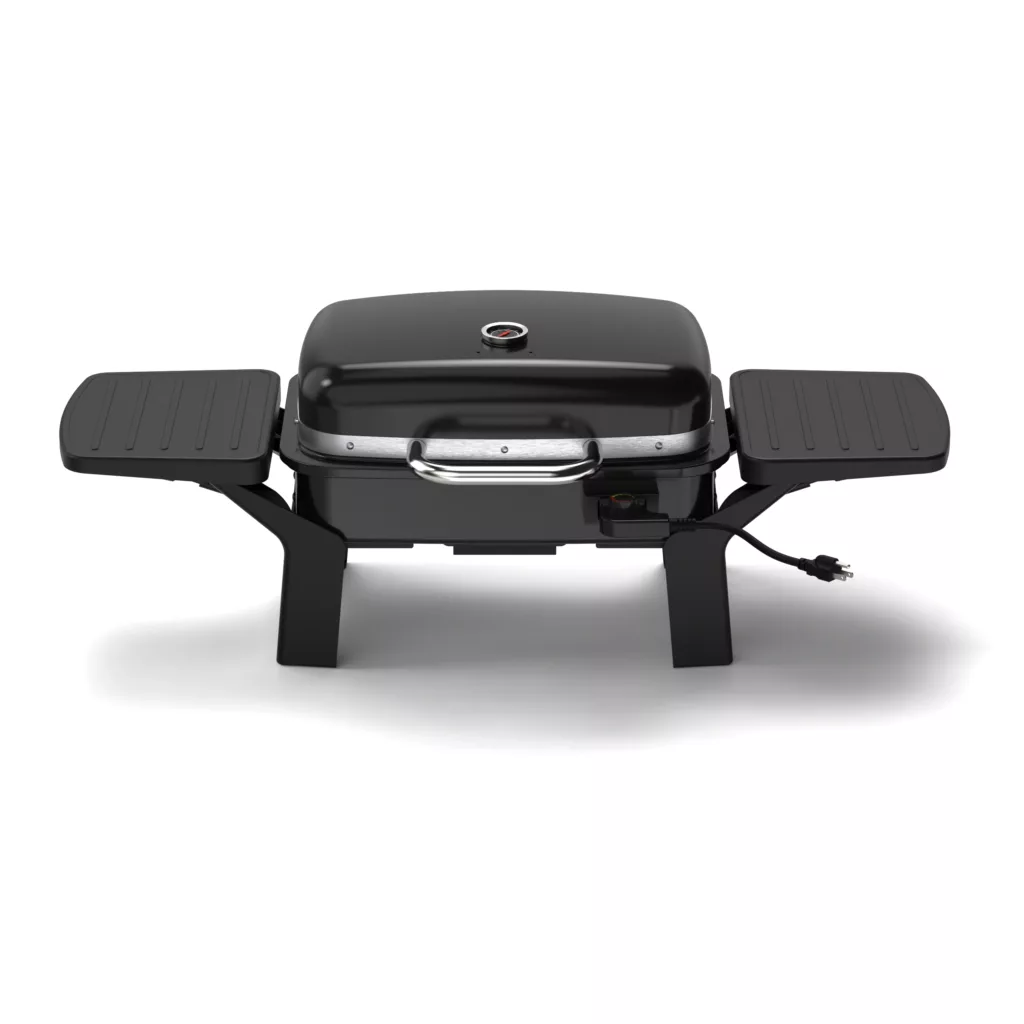
Tabletop units sit on a counter, stable table, or purpose-built support. The units suit smaller kitchens, apartment users, and households that do not want to store fuel. Buyers should compare the appliance footprint with the actual cooking area. Buyers should also compare lid clearance, cord position, and space needed around hot surfaces.
This format works best when quick setup and storage matter more than high serving capacity.
Stand Electric Grills for Patios and Balconies
Stand models raise the cooking surface to a comfortable working height. The models often improve outdoor mobility. Compared with countertop products, the models provide a more familiar barbecue posture. The models also provide a stronger presence in patio-focused retail lines.
Balcony use still depends on local rules, available power, ventilation, and the manufacturer’s stated application.
Compact, Kettle, and Analog Electric Smokers for Outdoor Cooking
Electric smokers use an enclosed chamber to retain heat for longer cooking cycles. Compact versions emphasize portability. Kettle-shaped units combine a rounded chamber with outdoor mobility. Analog smokers use direct manual controls rather than app-based interfaces.
These appliances are generally better for gradual cooking than rapid, open-grate searing. Buyers should examine chamber layout, rack access, ventilation, temperature control, cleaning, and replacement-part availability.
What Are the Benefits and Limitations of Electric Grills?
Key Benefits: Fast Heating, Precise Control, Lower-Smoke Operation, and Easy Cleanup
The main benefits are convenience and consistency. There is no charcoal to light or gas cylinder to connect. Adjustable control helps users repeat similar results. Many designs also reduce visible smoke by separating grease from the heating zone.
Practical advantages include:
- Simple startup for short cooking sessions
- Lower fuel-storage requirements
- Easier heat adjustment
- Removable grease collection
- Formats suitable for small spaces
“Lower smoke” is more accurate than “smokeless.” Food residue, dripping fat, and sugary sauces can still produce smoke.
Common Limitations: Power Access, Flavor, Weather Exposure, and Cooking Capacity
An electric appliance needs a suitable outlet. The appliance should not rely on an undersized extension lead. Maximum heat and recovery speed depend on wattage, construction, and local voltage.
Some users prefer charcoal or wood aroma. Outdoor buyers must also consider rain exposure, cord safety, and storage. A compact unit may be convenient but unable to serve a large gathering efficiently. Selection should balance footprint with realistic meal volume.
How Do You Choose the Right Electric Grill?
Match the Grill to the Use Environment, Cooking Area, Power, and Portability
Start with a five-step checklist:
- Define whether the appliance is for approved indoor use, a balcony, patio, campsite, or commercial setting.
- Estimate how many portions you must cook at once.
- Compare usable cooking area, not only overall dimensions.
- Check voltage, frequency, wattage, plug type, and outlet capacity.
- Decide whether handles, wheels, or a removable stand are necessary.
The correct choice follows the customer’s environment, not a generic “best grill” label.
Evaluate Safety, Cleaning, Compliance, Voltage, Plug Type, and OEM/ODM Options
Safety evaluation should include heat-resistant handling points, stable construction, grease collection, clear controls, and electrical protection appropriate to the destination market. Buyers should request compliance documents for the exact model rather than assuming one certificate covers every configuration.
For private-label projects, ask:
- Can voltage, frequency, cord, and plug match the sales country?
- Are color, finish, logo, packaging, and instructions customizable?
- What inspections are performed before shipment?
- Are samples and spare parts available?
- Will structural changes require new testing?
Which Electric Grill Types Fit Different Market Needs?
Tabletop and Stand Electric Grills for Compact-Space, Patio, and Balcony Segments
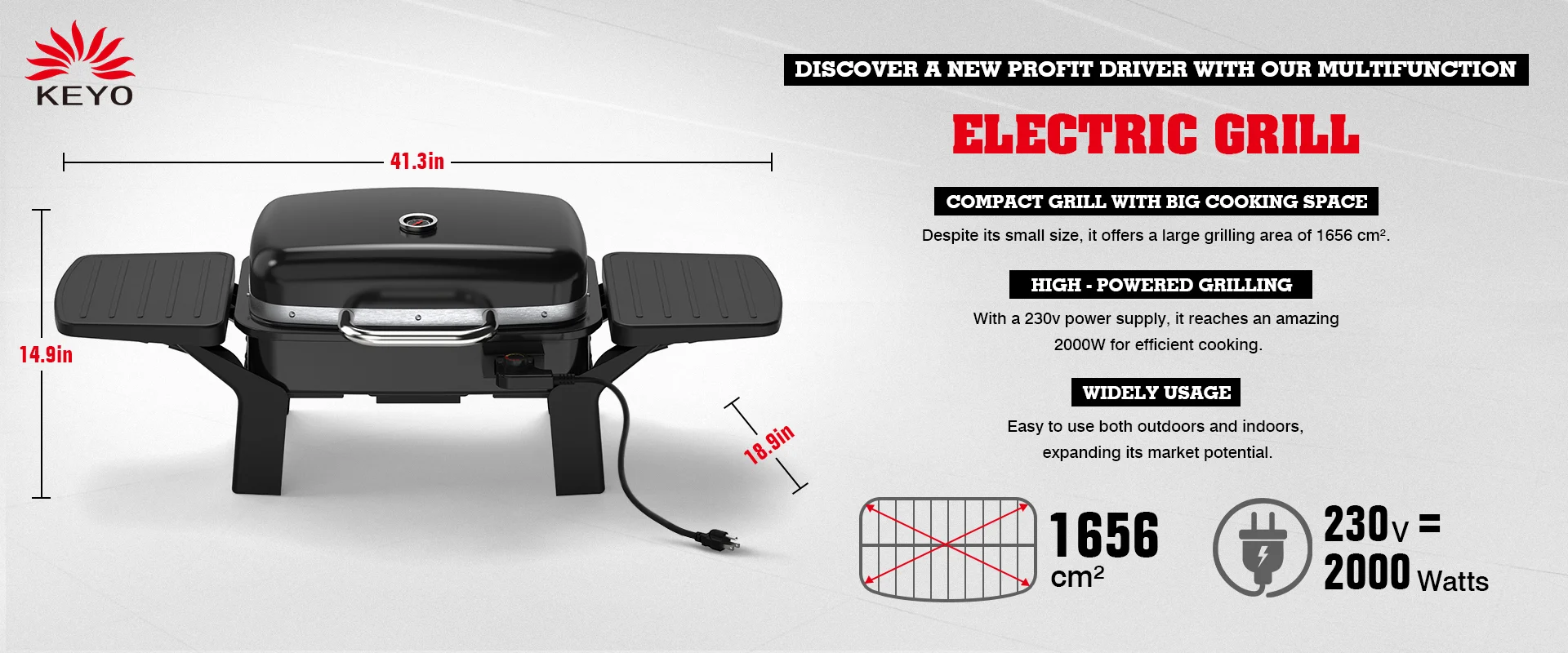
KEYO BBQ offers two reference formats for different retail positions. Model DD01-008 is a portable tabletop electric barbecue made of iron. The model measures 104.5 × 46 × 35 cm. The model has a 46 × 35 cm cooking area, a 23 cm cooking height, and a 240V, 50/60Hz, 2000W rating. The design also includes a rotary power switch, lid thermometer, and cool-touch stainless-steel handle.
The outdoor stand electric barbecue measures 71.5 × 46 × 96 cm. The barbecue has an 83 cm cooking height and the same 46 × 35 cm cooking area. The barbecue is rated at 240V, 50/60Hz, 2000W. The barbecue includes wheels, heat-resistant handles, rotary control, and a grease collection tray. The shared cooking area therefore supports two placements: tabletop merchandising and patio-oriented mobility.
Compact, Kettle, and Analog Electric Smokers for Outdoor and Specialty Retail Lines
Compact electric smokers suit travel or limited storage. Kettle smokers add a recognizable rounded shape and mobility. Analog smokers appeal to buyers who prefer direct manual operation. These categories broaden an assortment beyond fast grilling. The categories create options for slow-cooking customers. KEYO BBQ wholesale supplier presents compact, kettle, and analog electric smoker categories alongside tabletop and stand grills. Customization can cover dimensions, shape, color, finishes, and private-label presentation.
FAQ
Q: Are electric grills really smokeless?
A: The grills are better described as lower-smoke appliances. Grease separation can reduce smoke. Fat, food residue, and sugary sauces may still smoke on hot parts.
Q: Can you use an electric grill indoors or on an apartment balcony?
A: Operate the grill indoors exclusively when the specific model carries approval for indoor operation. For balconies, examine the product instructions, confirm outlet safety, ensure adequate ventilation, observe building rules, and follow local fire regulations.
Q: What is the difference between an electric grill and an electric smoker?
A: A grill generally uses stronger direct heat for faster cooking and browning. A smoker uses an enclosed chamber and longer cooking periods to manage heat and smoke flavor gradually.
Q: What should wholesale buyers look for in an electric grill manufacturer?
A: Buyers must examine model-specific compliance standards as well as voltage and plug compatibility. Buyers also need to assess heating consistency plus materials. Buyers should evaluate grease control and quality inspections. Buyers review production capacity along with lead time. Buyers check packaging and spare parts availability. Buyers consider OEM and ODM support options.