
Charcoal Grill vs. Electric Grill: Which Is Better for You?
Choosing suitable barbecue equipment can greatly improve your cooking. Yet the choice usually depends on knowing your exact living conditions and taste preferences. When choosing between a charcoal and an electric grill, shoppers must decide between classic outdoor cooking styles and up-to-date, space-saving tools. This detailed guide examines the main operations, space requirements, and working capabilities of both options to help you reach a smart conclusion.
The Core Mechanics: Charcoal Grill vs. Indoor Electric Grill
Learning how each grill works forms the initial stage in deciding which device matches your outdoor or indoor cooking demands. The two systems handle heating and cooking from completely separate design views.
How Charcoal Grills Deliver Authentic BBQ Smoked Flavor
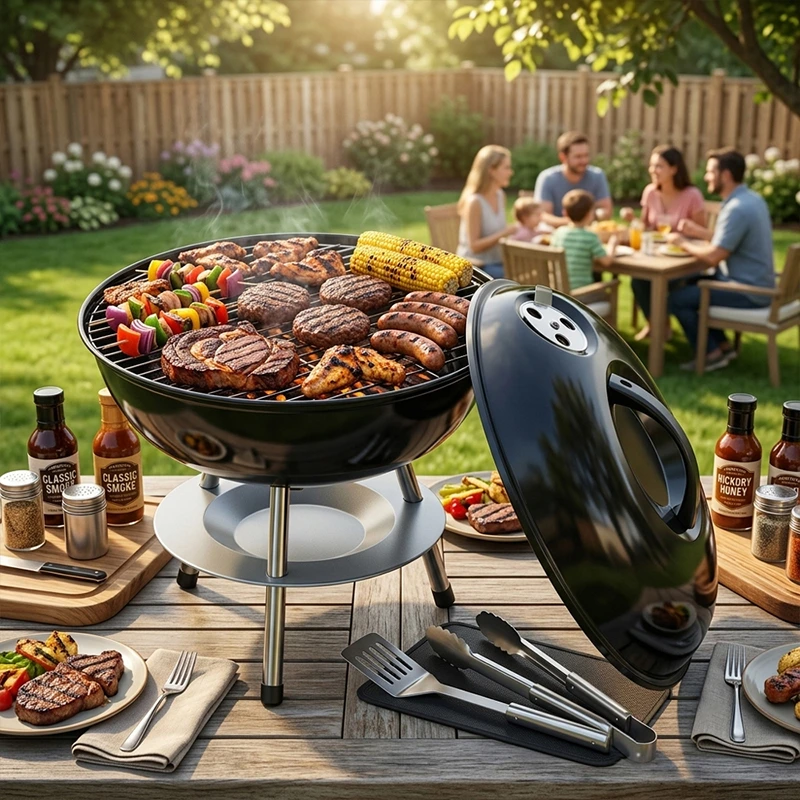
The classic charcoal grill depends on the burning of charcoal briquettes or natural wood lumps to create heat. This burning action generates smoke that mixes with the meat and forms that familiar genuine barbecue taste many outdoor cooking fans desire. The build of the device plays an important part in this action. For example, a deep body kettle grill supplies steady and lasting heat by containing more charcoal. This makes the grill good for slow-cooking thick meat pieces or whole birds. The rounded shape allows better heat movement. The movement lets the smoky smell cover the food in an even way.
How Electric Grills Provide Smoke-Free Convenience
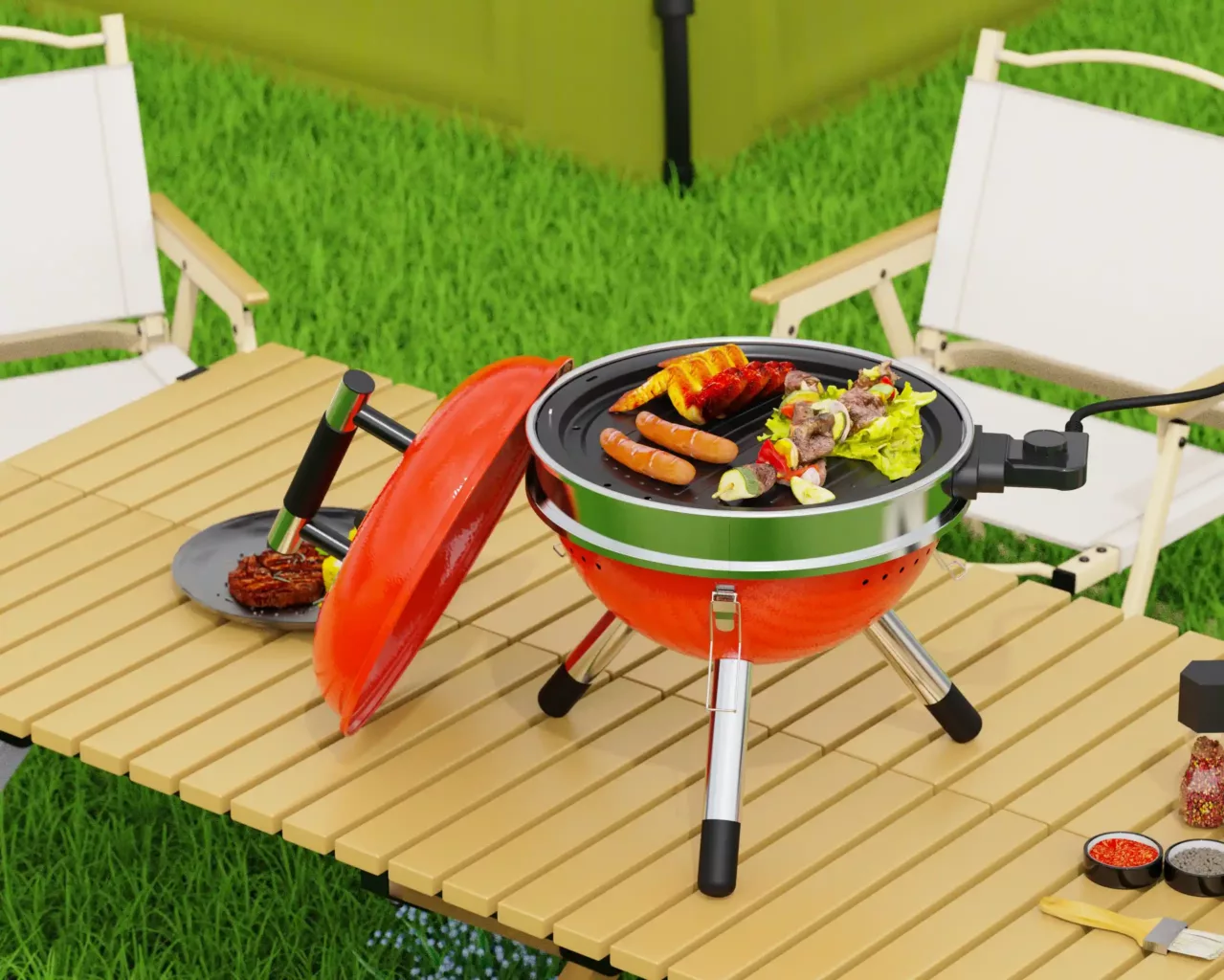
Electric grills work by sending an electrical current through heating elements. This removes the need for fuels that burn. The result is a smoke-free cooking space that feels very handy and kind to the environment. As a leading manufacturer, KEYO BBQ adds modern heating technology to items like the Portable Table Top Electric Barbecue Grill Model DD01-008. This exact model runs on a 240V power supply with a 2000W output. The model gives quick and steady heating over a 46×35 cm cooking area. The product size is 104.5x46x35 cm. This makes the model a small but strong choice for homes. Because there is no open flame, the model greatly cuts smoke output. The model uses the natural juices of the food that turn into vapor on the hot surface to produce flavor.
Space and Regulations: Apartment Balcony vs. Backyard Outdoor Cooking
Your home setting often decides the type of grill you can use in a safe and legal manner. City living areas follow very different rules from suburban houses with large backyards.
Safety Restrictions for Charcoal Grills in Urban Buildings
Running a charcoal unit needs an open-air setting because the unit creates carbon monoxide and large amounts of smoke. Urban buildings, apartment complexes, and property management groups often forbid open-flame grills on balconies because of tight fire safety rules. Using materials that burn requires a safe distance from structures that catch fire. The distance often requires at least a one-meter clearance. Breaking these rules not only creates a serious fire danger but can also lead to large fines. Because of this, charcoal cooking is almost only for open backyards, parks, or marked camping spots.
Why Electric Grills Are the Ultimate Solution for Balcony Cooking
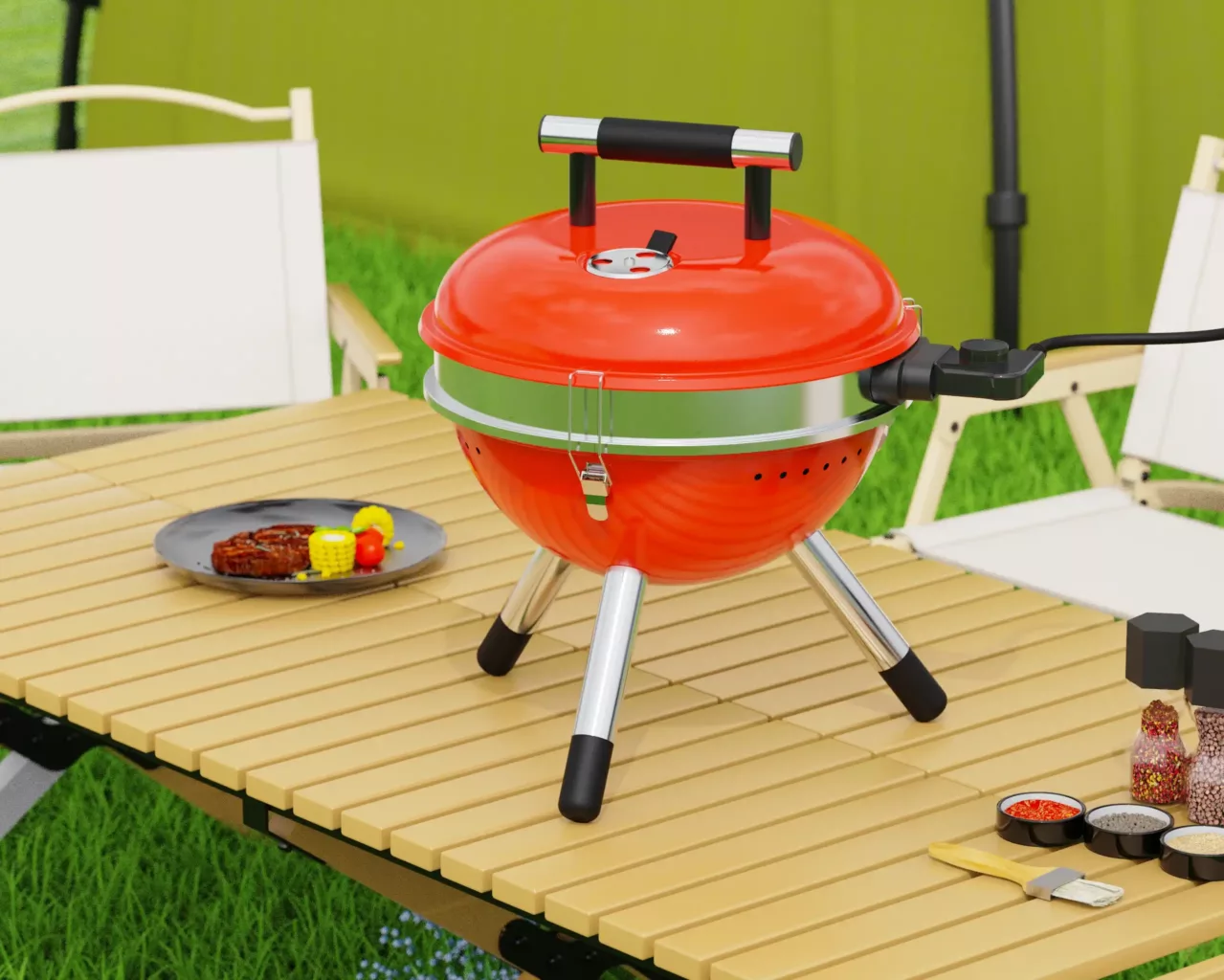
For people living in apartments, the electric grill for balcony cooking serves as a complete advantage. Since these units do not use open flames or fuels that burn, the units usually avoid the strict fire rules set by apartment buildings. The units come with details that put safety and cleanliness first in small areas. For instance, outdoor electric BBQ models often contain a special grease collection tray that gathers drops and splashes. This grease management system keeps the cooking zone neat and lowers the chance of sudden flames. The system makes the choice safe and useful for urban balconies.
Performance Comparison: Temperature Control, Maintenance, and Portability
Apart from flavor and space, the everyday ease of your grill will determine how often you truly like cooking on the grill. Let us compare the exact performance numbers of both groups.
Searing Power: High Heat Adjustments vs. Precise Electric Thermostats
Managing the temperature calls for different abilities based on the fuel type.
With a charcoal model, temperature adjustment is a hands-on task reached by changing the airflow. You must move the air vents to manage the oxygen that feeds the coals. Opening the vents raises the heat for searing, while closing the vents drops the temperature for slow roasting.
Electric units give a far simpler method. The units have an easy rotary power switch that supplies smooth control over the temperature. You simply turn the dial to reach the exact heat level needed for your recipe. This ensures top results with little trouble.
Feature Comparison
| Feature | Charcoal Grills | Electric Grills |
| Fuel Source | Charcoal Briquettes | Electricity |
| Flavor Profile | Authentic smoky taste | Natural grilled taste |
| Temperature Control | Manual via air vents | Precise via rotary switch |
| Best Environment | Open backyards | Balconies and patios |
| Heating Speed | Requires ignition and waiting | Rapid plug-and-play heating |
Post-BBQ Cleanup: Cleaning Ash vs. Dishwasher-Safe Electric Grates
Upkeep forms a key point for regular grill users. After a charcoal session, you must wait until the coals cool fully before dealing with the leftover ash. High-quality models make this easier with a removable ash catcher. The catcher lets you throw away the mess fast with little work. Still, the task includes handling soot and ash.
Electric models supply a more direct cleanup method. Since there is no charcoal, there is no ash to clear. The main upkeep includes emptying the grease collection tray and wiping the non-stick cooking grids. This trouble-free upkeep makes electric cooking very attractive for people with busy schedules.
Portability: Camping Use with a Kettle Grill vs. Plug-and-Play Electric Units
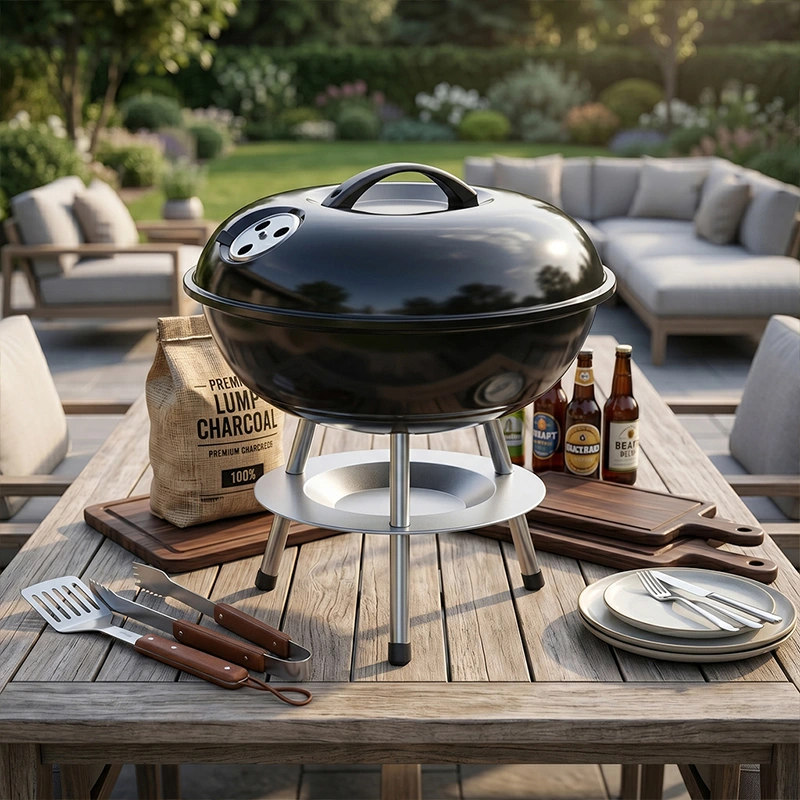
When you bring your cooking skills away from home, portability matters most. Charcoal models stay naturally portable since they do not need an electrical outlet. As an experienced KEYO BBQ wholesale supplier, we notice strong demand for small travel units like the Portable Charcoal Grill Model ZS02-007. This model has a product size of 43.3×29.5×29.5 cm and a cooking area of 41.3×26.5 cm. The model shows a lightweight foldable design that fits well into small spaces for camping or beach trips. Or the 14 Inch Kettle Charcoal Grill Model PG02-017 offers a classic dome shape with a 36.5×36.5×37 cm footprint. The model provides very good heat holding for off-grid adventures.
Electric units, while simple to shift with built-in wheels or lightweight tabletop designs, stay strictly tied to places with steady power sources. This makes the units less right for far camping but ideal for RV parks or moving from the kitchen to the patio.
Sourcing Guide: Charcoal vs. Electric Grill for B2B Importers
For business buyers and worldwide stores, choosing the right manufacturing partner counts just as much as picking the product group. The outdoor cooking market needs suppliers that can give steady quality at large volumes.
A dependable manufacturer works with wide facilities and strong quality checks. KEYO BBQ, that cover over 60,000 square meters with the ability to produce 300 containers per month, makes sure that big orders get finished without delay. Using top A-level Q196 cold-rolled steel and adding black enamel that withstands heat over 1000 degrees guarantees the product’s long life.
Also, current supply chain stability depends much on environmental rules. KEYO BBQ, that put money into a self-built wastewater treatment system, reduces the chance of compliance problems from outside help. By reaching fully compliant wastewater collection and treatment, the manufacturing process stays free from sudden environmental policy stops. This ensures that B2B importers get their shipments of both charcoal and electric grills on time every time.
FAQ
Q: Is it safe to use a charcoal grill vs indoor electric grill inside the house?
A: No, it is never safe to use a charcoal grill indoors due to the high risk of carbon monoxide poisoning and smoke buildup. For indoor cooking, an indoor electric grill is the only safe option, as the grill uses electric heating elements and creates very little to no smoke.
Q: Can I use an electric grill for balcony cooking if my apartment bans charcoal?
A: Yes, most apartment complexes and property management rules allow an electric grill for balcony cooking because the grill does not involve open flames, charcoal ash, or heavy smoke. This makes the grill a rule-following and fire-safe choice for urban balconies.
Q: Does an electric grill provide the same smoky flavor as a portable charcoal grill?
A: While an electric grill offers very good heat steadiness and convenience, the grill cannot exactly copy the rich traditional smoky flavor created by a portable charcoal grill. The portable charcoal grill depends on burning charcoal briquettes and wood chunks to smoke the food.
Q: Which is easier to clean and maintain: charcoal grill vs electric grill?
A: An electric grill is generally much easier to clean since the grill does not create charcoal ash, and many models have removable non-stick grates and grease management systems. A charcoal grill needs regular ash removal and manual scraping of the cooking grates to stop residue from building up. But high-quality models make this easier with a removable ash catcher.
Q: What should B2B buyers consider regarding electric BBQ grill wholesale manufacturing?
A: B2B buyers looking into electric BBQ grill wholesale should focus on voltage compatibility, international safety certifications like CE and LFGB, and the manufacturer’s ability to give steady supply chains supported by independent environmental compliance systems.