
Charcoal Grill Guide: Types, Sizes, Heat Control, and Checklist
Choosing a charcoal grill is easier when you stop looking for one “best” model and start with the job it must do. A compact patio unit, a 22-inch kettle, and a large adjustable-height cart can all be good choices for different users.
This decision matters a lot for retail buyers, importers, and distributors. It also impacts private-label programs. The choice affects product positioning and box dimensions. It even influences your overall inventory range and future customer service needs. This guide highlights the key choices you need to make. You should review these details before you compare suppliers or ask for a price quote.
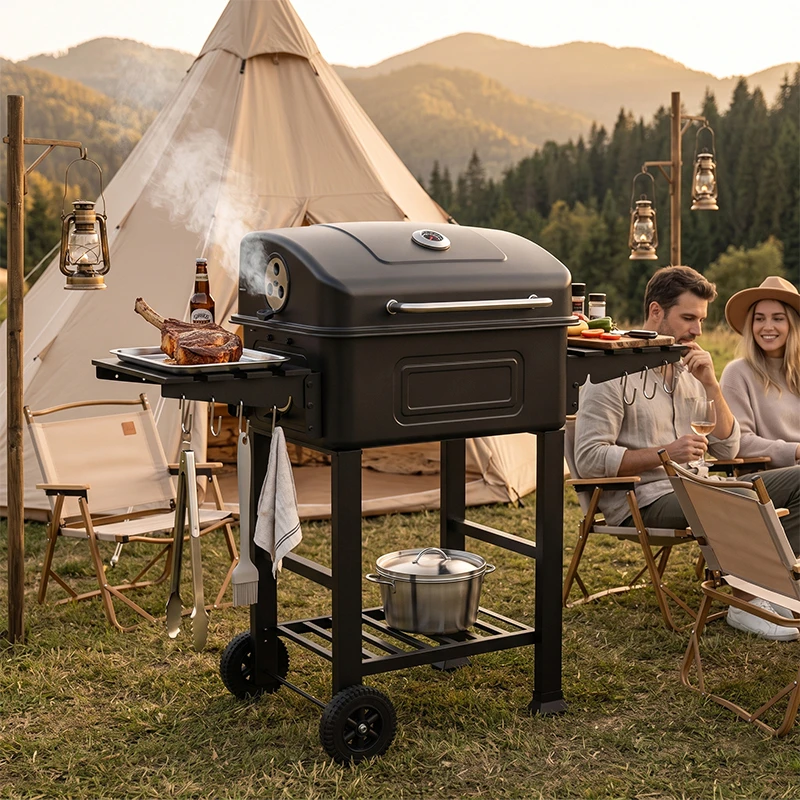
How to Choose a Charcoal Grill: Start With the Buying Decision
Match the Grill to the Primary Use Case
Begin with normal use, not the biggest event someone might host once a year. Ask where the grill will sit, how often it will move, whether covered cooking matters, and how much food usually needs to fit on the grate.
A kettle suits buyers who want an enclosed chamber in a familiar round format. Portable or foldable designs make sense when storage and transport matter. A wider cart or adjustable-height grill suits users who want more working space or direct control over the distance between fuel and food.
For a charcoal grill manufacturer or grill retailer building a range, this also creates clearer product roles: compact, mainstream family size, and larger feature-led models.
Define Normal Capacity Before Occasional Capacity
Cooking area and overall dimensions are not the same. A grill can look large because of legs, shelves, or a cart while offering a moderate grate. Compare usable cooking space first, then check the footprint needed for operation and storage.
For BBQ grill wholesale planning, this matters because a larger carton can affect freight and warehouse efficiency even when the cooking-area difference is small. End users face the same issue on a patio.
Which Charcoal Grill Type Fits Your Needs?
Kettle Charcoal Grills
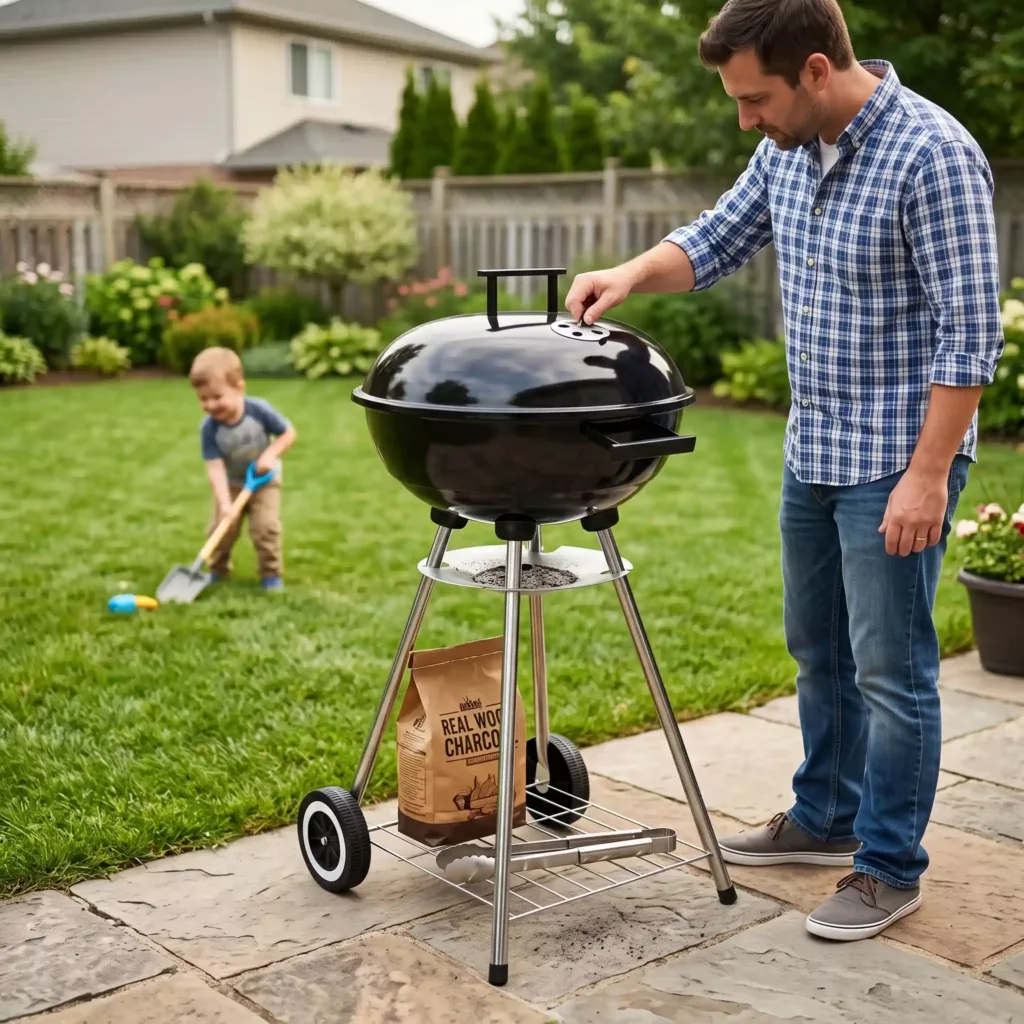
Kettle grills combine a round bowl with a lid, so buyers should compare grate diameter, vents, ash handling, wheels, and handle design. The format can support direct grilling and covered cooking without the footprint of a long cart.
An OEM kettle charcoal BBQ project should start with the target market and size tier, not cosmetic changes alone. Buyers comparing wholesome kettle grill suppliers should confirm the cooking grate, assembled dimensions, airflow controls, cleaning system, and packaging before treating two same-inch products as equivalent.
Portable and Foldable Charcoal Grills
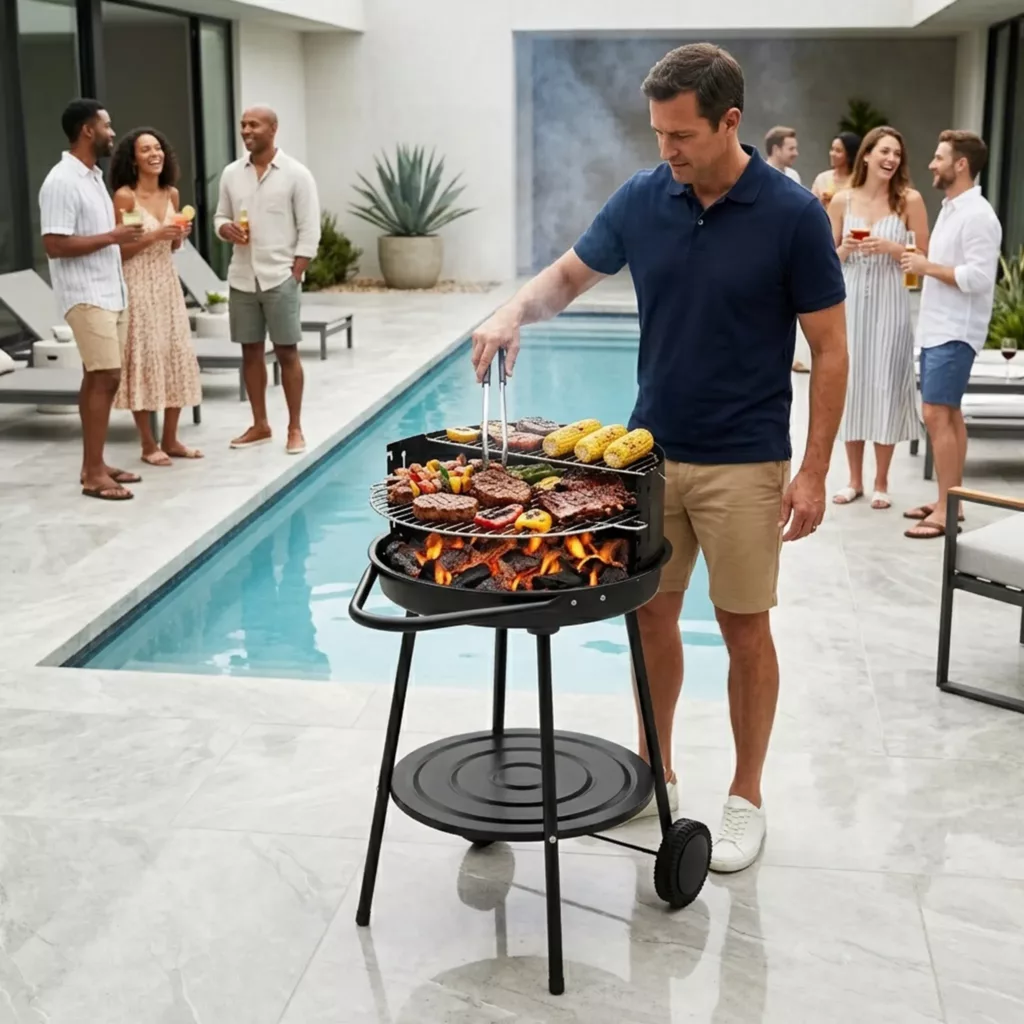
Portable grills trade some cooking area and work surface for easier movement and storage. That can be worthwhile for camping, balconies, picnics, or seasonal retail ranges.
Look beyond the word “portable.” Check assembled size, folded form, handles, stability, ventilation, and ash removal. An OEM kettle BBQ or compact charcoal program should reflect how customers will actually carry and store the grill.
Barrel, Trolley, and Adjustable-Height Grills
Barrel grills and trolley formats can provide more cooking room, shelves, or easier movement. Adjustable-height designs add another variable: the distance between charcoal and food.
That makes adjustable-height charcoal BBQ products relevant when buyers want a more hands-on fire-management experience. The mechanism, adjustment range, grate size, and fuel access should still be checked model by model.
What Size Charcoal Grill Should You Buy?
Compare Cooking Area With the Full Footprint
Use a simple sequence:
- Estimate the food normally cooked at one time.
- Confirm usable grate dimensions.
- Check whether the layout can support hotter and cooler areas.
- Measure the assembled footprint, including shelves and handles.
- Consider storage, movement, carton dimensions, and target retail price.
For B2B buyers, this prevents an assortment from becoming several products that look different but solve the same need. It also gives BBQ grill wholesale distributors a clearer story at each size level.
KEYO BBQ Models Show the Practical Range
At KEYO BBQ, we use different structures because markets need different combinations of capacity, mobility, and heat adjustment.
| Model | Format | Key dimensions | Buying point |
| PG07-071 | 22-inch kettle | 65.5 × 63 × 104.5 cm; 54 cm grate; 80 cm cooking height | adjustable air vents and ash catcher. |
| FT01-070 | Adjustable charcoal grill | 156 × 61.5 × 119 cm; 74.8 × 47.6 cm grate; 90 cm work height | Crank moves the fire pan through 14 cm; front fuel-access door. |
| KY19022 | Wheeled portable charcoal grill | 54.5 × 57.5 × 83 cm | Enamel-coated steel, wheels, bottom storage rack, and ventilation system. |
For relevant programs, we also support OEM, ODM, private-label branding, custom colors, and packaging.
How Heat Control Features Change the Buying Decision
Check Airflow Before Decorative Features
Charcoal responds to oxygen, so vents are functional buying features. Adjustable airflow helps the user influence how strongly the fuel burns, while a lid changes how heat circulates food.
When comparing charcoal grill manufacturers or BBQ grill suppliers, check where the intake and exhaust controls sit, whether they remain practical during cooking, and how ash may affect airflow. Do not assume every vent system works the same way.
Consider Fuel-to-Food Distance and Ash Management
Some grills allow the grate or fire pan to move. Changing that distance can alter heat intensity without immediately changing the amount of charcoal.
Ash management matters because accumulated ash can restrict airflow and make cleanup less convenient. Kettle buyers should check the ash cup or catcher design, while larger carts need practical fuel-area access.
Charcoal Grill Buyer Checklist Before You Order
Before placing an order, turn the decision into a specification sheet:
- Grill type and intended customer
- Cooking-grate dimensions
- Overall assembled dimensions
- Vent and heat-control method
- Lid and ash-management design
- Mobility, shelves, and storage
- Material and finish requirements
- Assembly and packaging requirements
- Branding or OEM/ODM needs
- Market-specific compliance requirements
A Practical B2B Buying Scenario
Imagine a distributor planning three charcoal products for spring. Instead of asking charcoal grill manufacturers for three random quotations, the buyer defines one compact unit, one mainstream kettle, and one larger adjustable model.
The compact unit answers storage and mobility needs. The kettle becomes the core family option. The adjustable model creates a clear step-up in cooking area and heat-control flexibility. This also helps buyers assess grill wholesalers and other suppliers against one specification rather than comparing quotations built on different assumptions.
For private-label development and BBQ grill wholesale distributors, each SKU now has a distinct reason to exist.
FAQ
Q: What are the main types of charcoal grills?
A: Common choices include kettle, portable or foldable, barrel or trolley grills. Each balances cooking area, mobility, storage, and heat management differently.
Q: What size charcoal grill should I buy?
A: Choose by usable cooking area first, then confirm assembled dimensions. A larger body does not always mean proportionally more grate space.
Q: Which charcoal grill features matter most for heat control?
A: Check adjustable vents, lid design, and, where available, the ability to change the distance between charcoal and the cooking grate.
Q: What features define the best charcoal grill for camping?
A: To find the best charcoal grill for camping, you should look at portable and foldable designs, which trade some cooking area and work surface for easier movement and storage. However, you must look beyond just the word “portable”; ensure you check the assembled size, folded form, handles, stability, ventilation, and ash removal to ensure it fits your actual travel needs.
Q: What are the main advantages when comparing a charcoal vs electric grill?
A: Electric units provide simple, plug-and-play convenience. However, charcoal models stand out because they deliver a fun, hands-on fire management experience. Real charcoal reacts to fresh oxygen. This lets you actively adjust the cooking temperature using the air dampers and the lid. You can also move the food closer to the hot fuel. Furthermore, traditional charcoal designs easily handle multiple cooking styles. You can do quick direct searing, slow covered roasting, and easily set up hot and cool zones across the grate.