
Small Charcoal Grill Selection Guide: Footprint, Cooking Area, and Portability
A small charcoal grill can be harder to choose than it looks. Two models with similar body sizes may offer very different cooking space, storage needs, and handling. For importers and retailers, those differences can also affect SKU planning, packaging efficiency, and how easily a product fits a particular sales channel.
A better selection method separates three factors: footprint, usable cooking area, and portability. For B2B buyers, packaging and customization should be checked at the same time. This makes it easier to compare products on practical specifications rather than vague terms such as “mini” or “compact.”
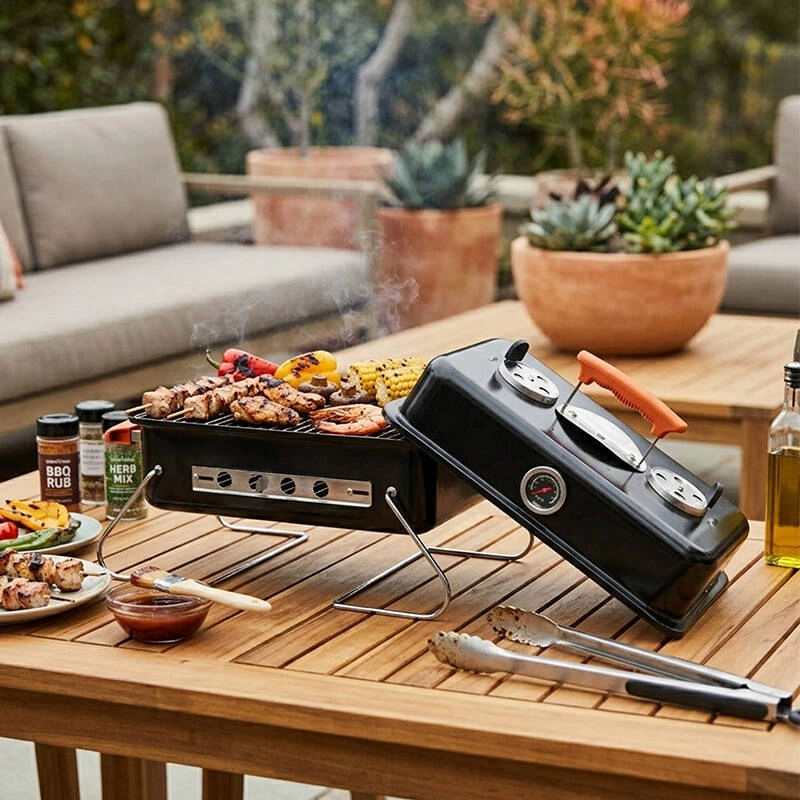
What Actually Makes a Charcoal Grill “Small”?
Measure the Full Operating Footprint, Not Just the Grill Diameter
A compact body does not always mean a compact setup. Handles, legs, lid movement, and folding structures can increase the space needed while the grill is in use.
Start with assembled width, depth, and height. Then look at cooking height, grate dimensions, the charcoal pan or firebowl, and the space required for storage. A buyer sourcing an OEM small charcoal grill should not rely on a “mini” label alone.
For retail programs, this distinction matters. A product may look small on a product page but still require more floor or shelf space once assembled. Another design may have a slightly larger body yet fold into a much easier storage format.
Separate Product Footprint From Usable Cooking Area
Exterior dimensions answer one question: how much space does the grill occupy? Grate dimensions answer another: how much food can actually be placed over the cooking area?
For example, our PG02-017 14-inch mini kettle grill measures 36.5 × 36.5 × 37 cm and has a 34 cm diameter cooking area. Its charcoal pan is 27 cm in diameter. These numbers give a mini kettle BBQ OEM buyer something concrete to compare instead of depending on photos or general size descriptions.
How Much Cooking Area Should a Small Charcoal Grill Provide?
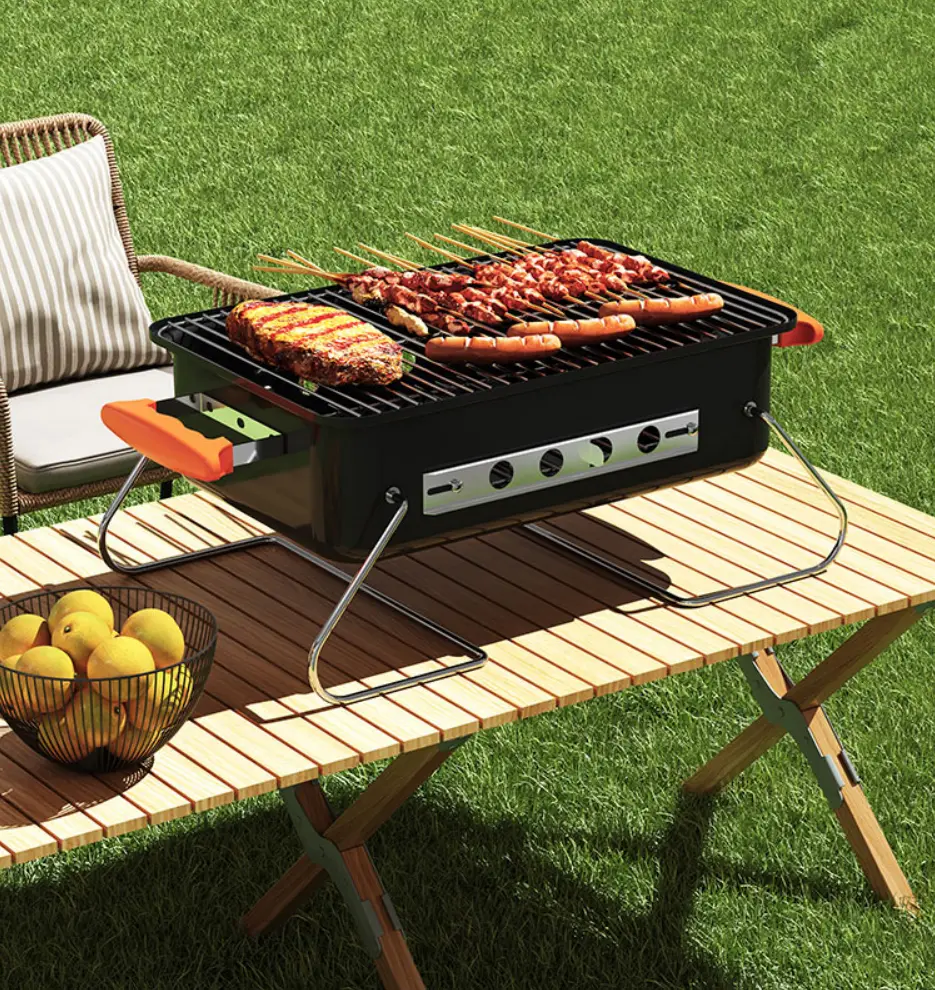
Compare Usable Grate Space With the Intended Cooking Load
There is no single cooking-area figure that works for every market. A compact model aimed at light outdoor cooking may need less grate space than one positioned for family meals or frequent weekend use.
Actual dimensions make the comparison clearer:
| KEYO BBQ model | Product size | Cooking area | Format |
| PG02-017 | 36.5 × 36.5 × 37 cm | Ø34 cm | Mini kettle |
| ZS01-014 | 56 × 31 × 36.2 cm | 41 × 26 cm | Folding portable grill |
| ZS02-007 | 43.3 × 29.5 × 29.5 cm | 41.3 × 26.5 cm | Folding-leg portable grill |
The table shows why body size alone can be misleading. PG02-017 uses a round compact layout. ZS01-014 provides a longer rectangular cooking surface. ZS02-007 offers a similar grate size in a shorter overall body.
Look at Cooking-Area Efficiency, Not Size Claims Alone
A useful buying question is simple: how much practical cooking space does the grill provide for the space it occupies?
This does not need to become a formal score. It is simply a comparison method.
One design may prioritize grate area. Another may trade some compactness for a lid, thermometer, taller structure, or easier handling. An OEM small barbecue grill should therefore be evaluated from a specification sheet rather than a product image alone.
For buyers building several SKUs, this approach also helps avoid products that look different but serve almost exactly the same use case.
How Should You Evaluate Portability in a Small Charcoal Grill?
Carrying, Folding, and Compact Storage Are Different Needs
“Portable” can mean several things. A grill may be easy to carry, quick to fold, simple to store, or convenient to move between locations. Those needs can lead to different structures.
ZS01-014 measures 56 × 31 × 36.2 cm and provides a 41 × 26 cm cooking area. It includes a temperature gauge, insulated side handles, ventilation, and a folding structure.
ZS02-007 measures 43.3 × 29.5 × 29.5 cm with a 41.3 × 26.5 cm cooking area. It also uses a folding format and includes a thermometer, insulated handles, and ventilation.
A portable BBQ OEM supplier should explain these structural differences clearly instead of treating every compact grill as the same product type.
Check Handles, Folding Parts, Stability, and Storage
Before approving a portable format, check the complete setup:
1. Confirm how the frame or legs open and lock.
2. Check where the user grips the grill during handling.
3. Review removable parts before transport.
4. Check stability at the normal cooking position.
5. Compare the assembled form with its storage requirements.
For a folding charcoal BBQ grill OEM project, this practical review is more useful than simply asking whether the product is “portable.”
Which Small Charcoal Grill Format Fits a Retail or Private-Label Program?
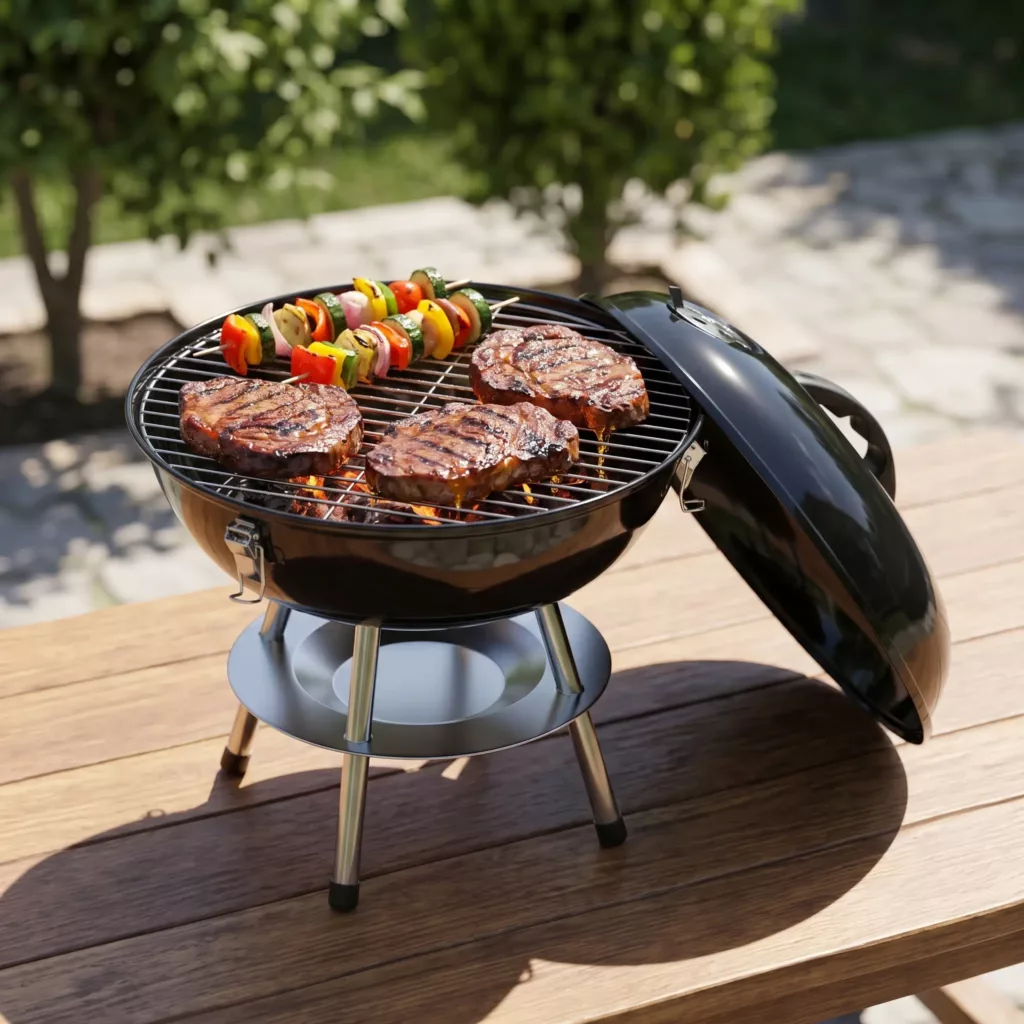
Compare Mini Kettle and Folding Designs
A mini kettle gives a product range a familiar round silhouette. A folding rectangular grill places more emphasis on compact storage and mobility. Neither format is automatically the right choice for every channel.
Consider a simple retail scenario. A buyer may select PG02-017 for shoppers who want a traditional compact kettle shape, while ZS01-014 or ZS02-007 can fill a more mobility-focused position. This creates meaningful separation between SKUs instead of changing only colors or cartons.
That distinction is especially useful when developing private label grills because each model can answer a different buying need.
Add Packaging and OEM Requirements to the Buying Brief
Product dimensions are only part of a commercial specification. Before requesting a quotation, buyers should also define logo requirements, color, packaging, structural customization, target-market compliance, carton requirements, and expected order volume.
A charcoal grill supplier should confirm which changes are practical for the selected structure rather than promising customization without clear boundaries.
At KEYO BBQ, we support OEM and ODM grill projects from R&D and customization through manufacturing, quality control, packaging, and logistics. We also support customer factory audits and third-party audits.
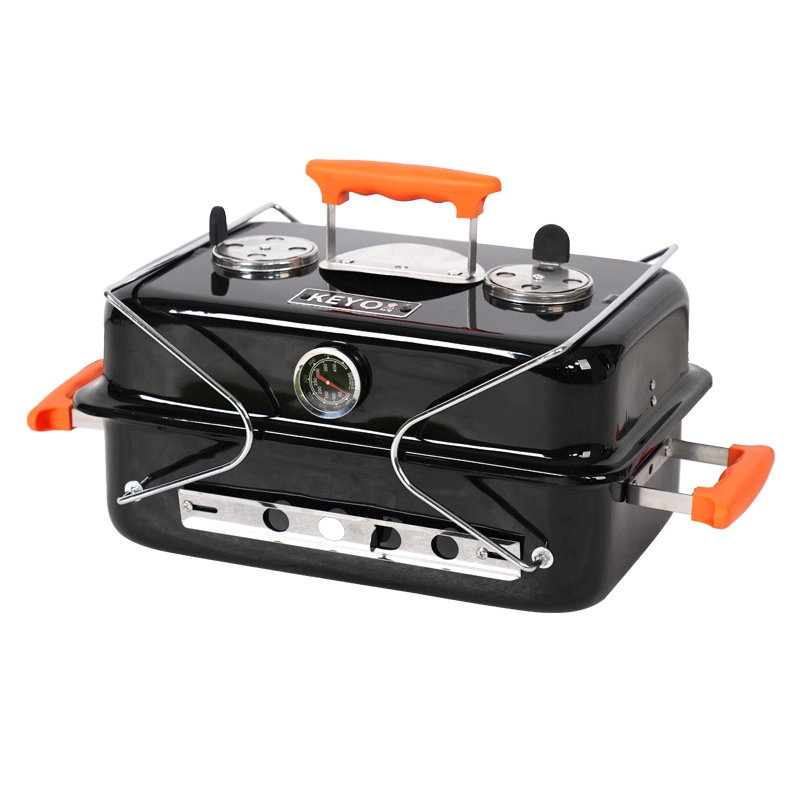
How Can KEYO BBQ Support Small Charcoal Grill Sourcing?
Match Real Models to the Target Channel
We manufacture several compact charcoal-grill formats, which lets buyers compare actual structures instead of choosing from a generic “small grill” category.
PG02-017 provides a 34 cm round cooking area in a 36.5 × 36.5 × 37 cm body. ZS01-014 provides 41 × 26 cm in a folding 56 × 31 × 36.2 cm format. ZS02-007 provides 41.3 × 26.5 cm in a 43.3 × 29.5 × 29.5 cm body.
Confirm the Specification Before Ordering
A custom BBQ grill manufacturer should turn a commercial idea into a controlled specification before production starts.
At KEYO BBQ, we support product development, branding, packaging, and OEM/ODM customization. We have more than 20 years of manufacturing experience and serve customers in more than 100 countries.
Before placing an order, confirm dimensions, cooking area, materials, mobility structure, packaging, compliance needs, and order terms. That keeps a small-grill project focused on measurable requirements and reduces unnecessary revisions later.
FAQ
Q: Is a compact charcoal grill the same as a portable charcoal grill?
A: Not always. Compact describes how much space the grill occupies. Portable describes how easily it can be carried, folded, moved, or stored. A compact grill is not automatically easy to transport.
Q: What should buyers specify for an OEM small charcoal grill?
A: Specify target dimensions, cooking area, material requirements, mobility design, branding, packaging, target-market compliance, order volume, and testing requirements. Clear specifications make supplier comparison more accurate.
Q: Can a small charcoal grill be used on an apartment balcony?
A: A small footprint does not automatically make charcoal grilling suitable for a balcony. Users should follow the specific grill instructions as well as local fire, building, and property rules before use.