
Kettle Grill Guide: Size, Lid, Vents, and Ash Management
A kettle grill looks simple: a round bowl, a lid, charcoal, and a cooking grate. Yet small design choices change heat control, cleanup, mobility, and retail positioning. That matters to home users as well as importers, distributors, and private-label buyers.
The best starting point is not “Which kettle is biggest?” but “Who will use it, where, and which features will matter most?” At KEYO BBQ, we use that buyer-fit approach when discussing kettle selection and customization.
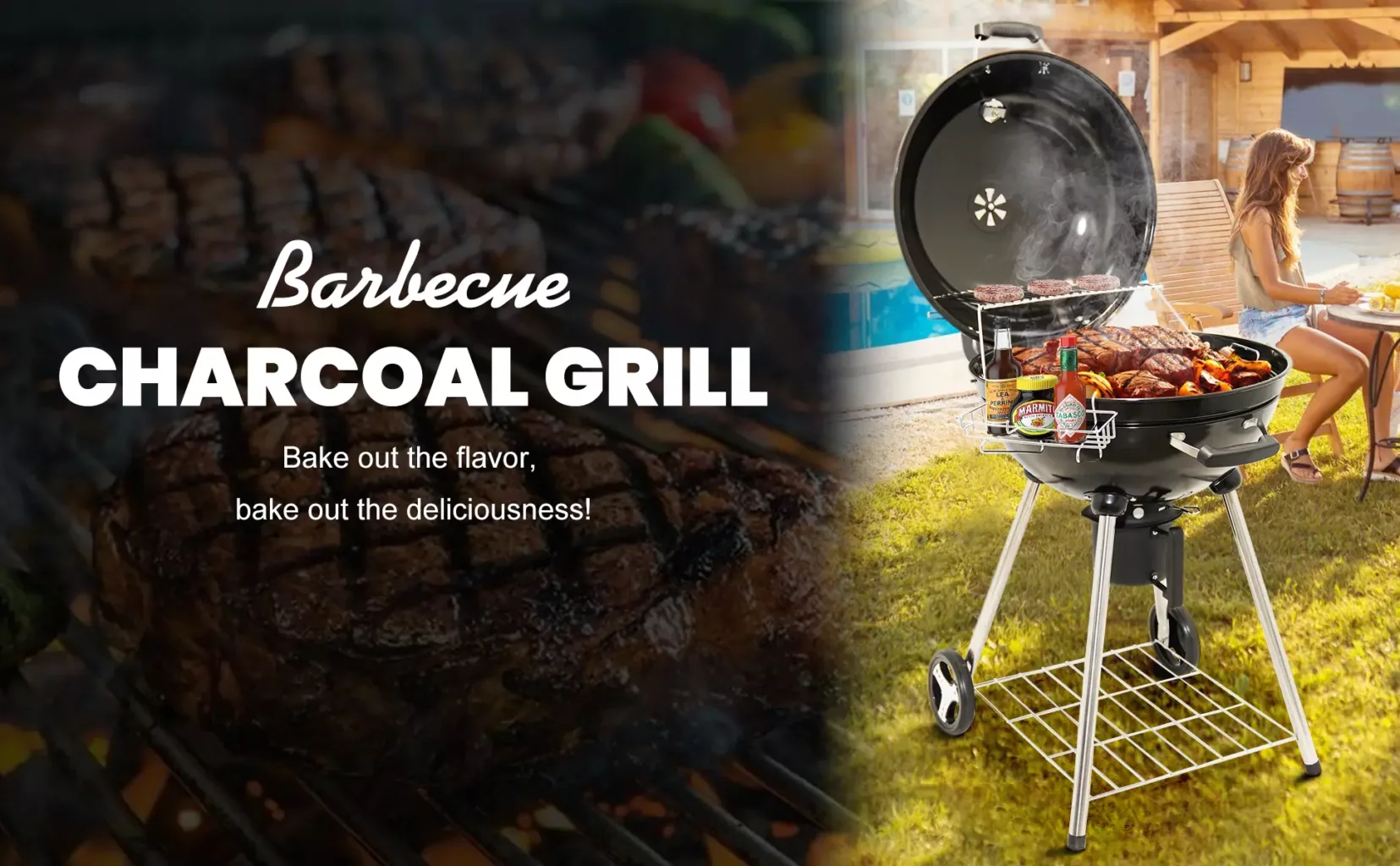
What Should You Look for Before Buying a Kettle Grill?
How the bowl, lid, and airflow system work together
Charcoal needs oxygen, so adjustable vents help the user influence combustion. The lid creates a more enclosed cooking environment for direct grilling and slower indirect cooking.
Lid construction also affects handling. A detachable lid gives quick access to the cooking area, while a one-piece lid can simplify repeated opening and closing. KEYO BBQ offers kettle configurations with both lid approaches, adjustable ventilation, and removable ash-catching designs.
For an importer comparing a kettle barbecue factory, these details influence user experience, product positioning, and the feature story shown online or on packaging.
Start with buyer fit, not a long feature list
Before selecting a model, answer four questions:
1. How much cooking space does the target user normally need?
2. Will the grill stay on a patio or be moved and stored often?
3. Does the market value easy ash cleanup and airflow control?
4. Is the product a single retail SKU or part of a broader range?
More features do not automatically mean a better product. The right configuration must match the customer and sales channel.
How Do You Choose the Right Kettle Grill Size?
Compare usable cooking area, not diameter alone
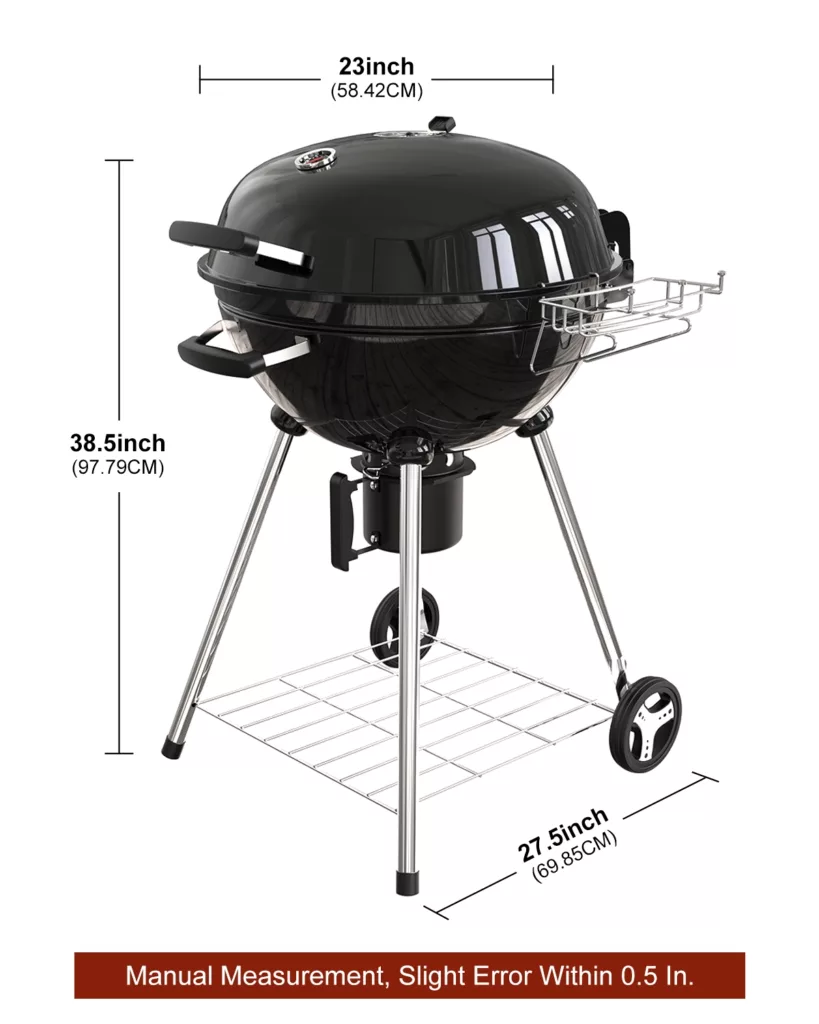
Nominal size matters, but buyers should also compare cooking-grid diameter, overall footprint, cooking height, and charcoal-pan dimensions.
| Model | Product size | Cooking area | Practical fit |
| PG04-008 | 51.5 × 44.5 × 72 cm | Ø41.5 cm | More compact round-kettle format |
| PG07-071 | 65.5 × 63 × 104.5 cm | Ø54 cm | Full-height 22-inch kettle |
| PG07-070 | 69 × 58 × 98 cm | Ø54 cm | 22.5-inch kettle with Ø42 cm charcoal pan |
PG04-008 uses iron construction, a 32 cm charcoal pan, an adjustable charcoal tray, and a cleaning system designed around ash management. PG07-071 is iron and combines a 54 cm cooking area with adjustable vents and a removable ash catcher. PG07-070 also provides a 54 cm cooking-area diameter with a 42 cm charcoal pan.
When does a larger format make sense?
A bigger kettle is very helpful when people frequently cook many different foods at the same time. Nevertheless, these increased dimensions directly impact home storage and shipping carton sizes. They also demand more retail merchandising space and require extra handling effort. Therefore, anyone exploring wholesale kettle charcoal grill options should do the same thing instead of just trusting the basic nominal diameter.
For a single hero SKU, a mid-size kettle with practical airflow and cleanup may suit several use cases.
Lid, Vents, and Ash Management: Which Features Matter Most?
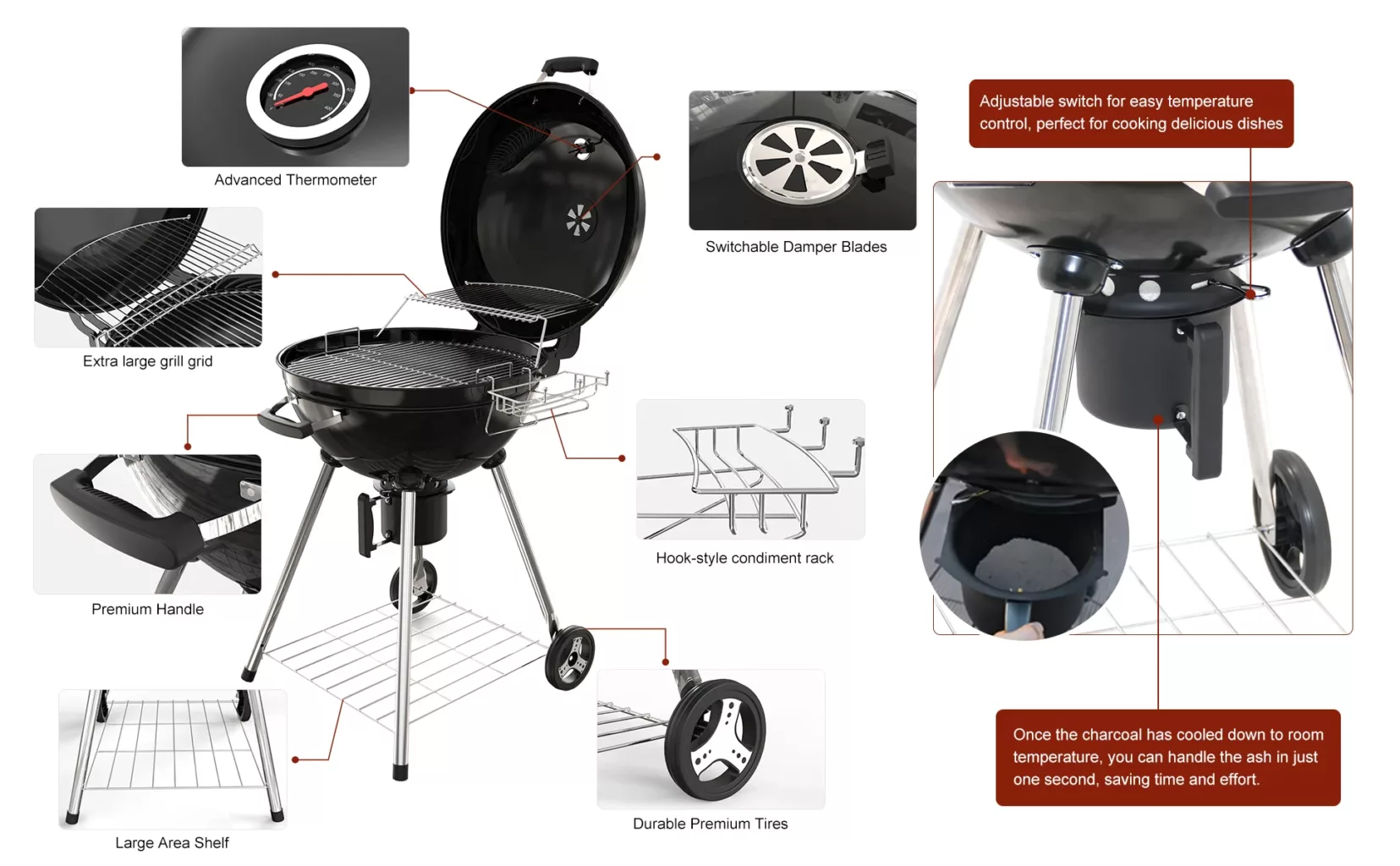
Lid design changes access and heat management
Check how the lid opens or removes, where the handle sits, and whether the format fits the intended cooking style. A detachable lid favors direct access; a one-piece format offers a more integrated design.
For retail and private-label planning, lid design also affects how the product is presented. A feature is valuable when customers can understand its purpose quickly, not simply because it adds another item to a specification sheet.
Adjustable vents make charcoal easier to manage
Air vents give the user a repeatable way to influence airflow. PG07-071 uses adjustable vents with its enclosed kettle form, and PG07-070 also includes adjustable ventilation.
The key buying question is whether the vents are easy to adjust and appropriate for the intended product tier. Buyers should consider the complete airflow arrangement together with bowl and lid design instead of judging a vent by appearance alone.
Ash management is a daily-use feature
Ash cleanup is easy to overlook in a showroom. A removable catcher separates spent ash from the main bowl and simplifies routine cleaning. PG07-070 and PG07-071 use removable ash-catching solutions, while PG04-008 combines ash management with a one-touch cleaning approach.
For frequent grill users, easier cleanup can become a stronger everyday benefit than a feature that is rarely used.
How Do Portability and Convenience Features Change Buyer Fit?
Match features to the real use case
Portable buyers care about footprint and transport. Backyard users may care more about working height, stability, cooking space, and cleanup. Retail buyers should translate those differences into a clear reason for each SKU to exist.
An OEM small kettle BBQ program, for example, should begin with storage and mobility requirements rather than simply shrinking a standard grill. A full-height model such as PG07-071 has an 80 cm cooking height and a 54 cm cooking area, creating a different use experience from a compact format.
The same principle applies to accessories and convenience features. Buyers should ask whether a feature solves a real customer problem, supports the target price point, or gives retailers a clear selling message.
Mini case study: reducing overlap in an assortment
Consider an illustrative retailer planning two kettle positions. PG04-008 can cover a more compact role, while PG07-070 can serve customers seeking a larger 22.5-inch format. The distinction is easy to communicate: smaller footprint versus larger cooking area.
This is stronger assortment logic than adding near-identical SKUs without a clear customer reason. It also gives purchasing teams a clearer framework for forecasting, packaging, merchandising, and future line extensions.
What Should B2B Buyers Confirm Before Sourcing?
Searches such as kettle BBQ wholesalers, China kettle BBQ wholesalers, and China kettle style grill wholesalers usually come from buyers who have moved beyond basic product education. At that stage, product fit should become a written specification.
Confirm overall size, cooking-grid diameter, charcoal-pan dimensions, lid format, vent arrangement, ash solution, material, mobility needs, branding, packaging, and target-market compliance before requesting quotations.
At KEYO BBQ, we support OEM and ODM work from R&D and customization through manufacturing, quality control, packaging, and logistics. We have more than 20 years of manufacturing experience and have served over 2,000 customers across 100+ countries.
A buyer comparing a kettle barbeque grill factory, an OEM kettle charcoal barbecue grill program, or different China kettle BBQ suppliers should therefore evaluate more than unit price. Sample approval, QC, customization scope, packaging, compliance, communication, and production planning all affect whether a grill is commercially suitable.
Explore the KEYO BBQ kettle grill range first, then define the specification before moving into quotation and private-label discussions.
FAQ
Q: What size kettle grill is best for a patio or backyard?
A: Start with usable cooking area and overall footprint. A compact kettle is easier to store and move, while a 22- or 22.5-inch format provides more cooking space. The right choice depends on normal cooking volume, available space, and mobility needs.
Q: Are vents more important than a built-in thermometer?
A: They solve different problems. Vents control airflow to the charcoal, while a thermometer helps monitor temperature. For a basic charcoal kettle, adjustable ventilation is fundamental to fire management.
Q: What should I check before ordering an OEM kettle barbeque grill?
A: Define size, cooking area, lid style, vent layout, ash management, materials, branding, packaging, and compliance needs before sampling. This makes quotations easier to compare and reduces specification changes later.
Q: How should I compare China kettle BBQ grill suppliers?
A: Compare sample quality, QC, customization, compliance support, packaging, communication, and delivery planning. Price matters only after the supplier can meet the product and market requirements.
Q: Is a kettle grill suitable for wholesale and private-label programs?
A: Yes. Kettle grills can support different size, feature, and positioning strategies. For buyers considering OEM kettle barbeque grill factory options, the key is to build a clear specification and select a configuration that gives customers a visible reason to choose that SKU.