
How to Choose the Right Material of a Grill
A low-cost body may suit a short seasonal program, while a commercial or coastal application needs more deliberate control of steel, coating, welds, and cooking surfaces.
Start with the Grill’s Working Conditions
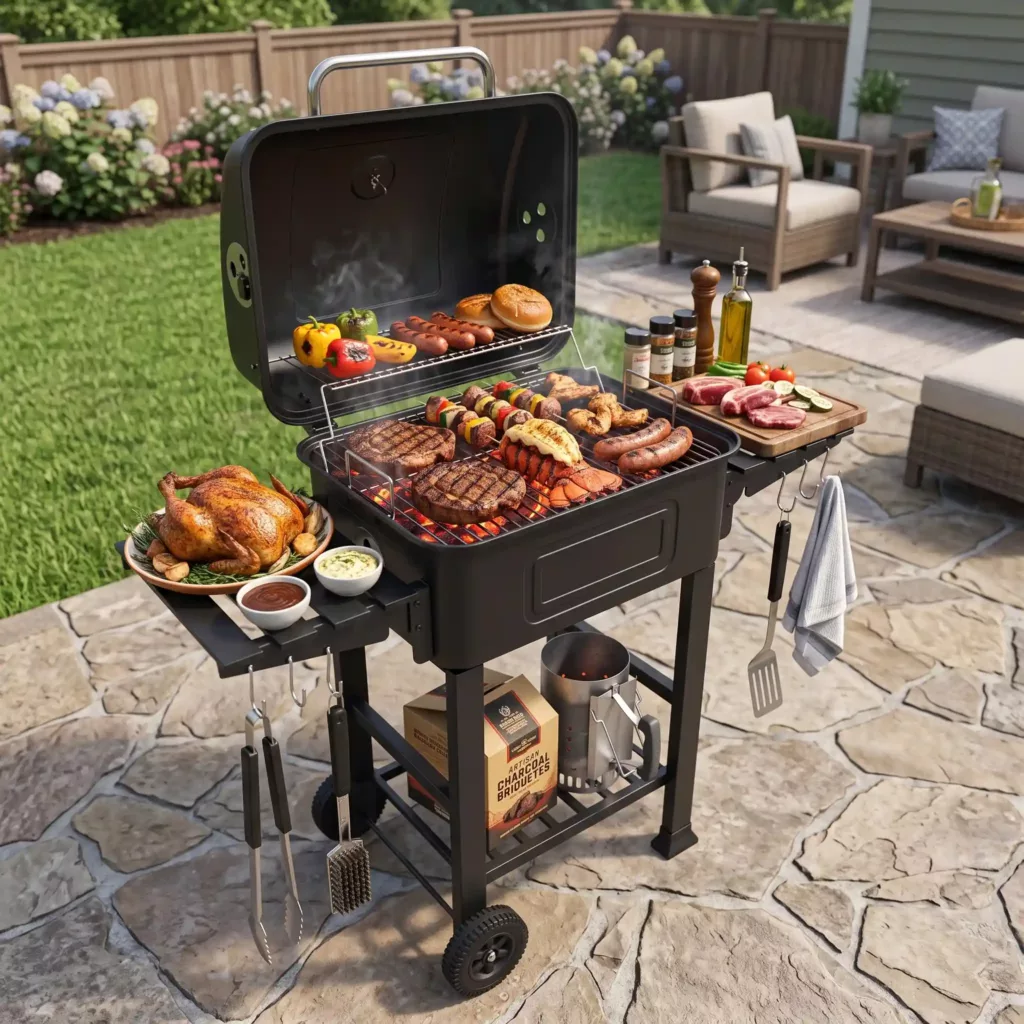
Before comparing materials, define where and how the grill will operate. A backyard kettle used on dry weekends has different exposure from a restaurant unit that is cleaned daily or a portable grill carried in humid coastal weather. Record fuel type, target cooking temperature, expected cooking frequency, storage conditions, cleaning chemicals, cooking-area size, and the sales market.
Heat forms only one part of the decision. A material must keep its shape, and maintain a cleanable surface after repeated heating and cooling. These conditions become the basis of a product brief and comparable quotation.
Compare the Main Grill Materials
Iron, cold-rolled steel, stainless steel, cast iron, and enamel-coated steel can each serve different functions in a grill. The best specification may combine several materials rather than use one material throughout the product.
| Material choice | Useful strengths | Questions to verify |
| Cold-rolled steel | Formable, cost-efficient, suitable for bodies and structural parts | Grade, thickness, weld quality, coating system, corrosion protection |
| Stainless steel | Corrosion resistance, clean appearance, useful for cooking surfaces and exposed parts | Stainless steel type, thickness, finish, component application, and joining quality |
| Cast iron | High thermal mass and strong searing performance for grates | Weight, seasoning or coating care, impact resistance, handling and packaging |
| Enamel-coated steel | Smooth cleanable surface and strong heat resistance when correctly applied | Base steel, enamel finish, heat resistance, coating quality, and applicable product testing |
Cold-rolled steel can provide a practical body structure when protected with a suitable finish. KEYO BBQ uses A-grade Q196 cold-rolled steel plate and also uses enamel coatings and stainless steel components. Depending on the product design, these materials can be combined to meet different requirements for structure, durability, corrosion resistance, and high-temperature performance.
Specify Stainless Steel Grills by Component
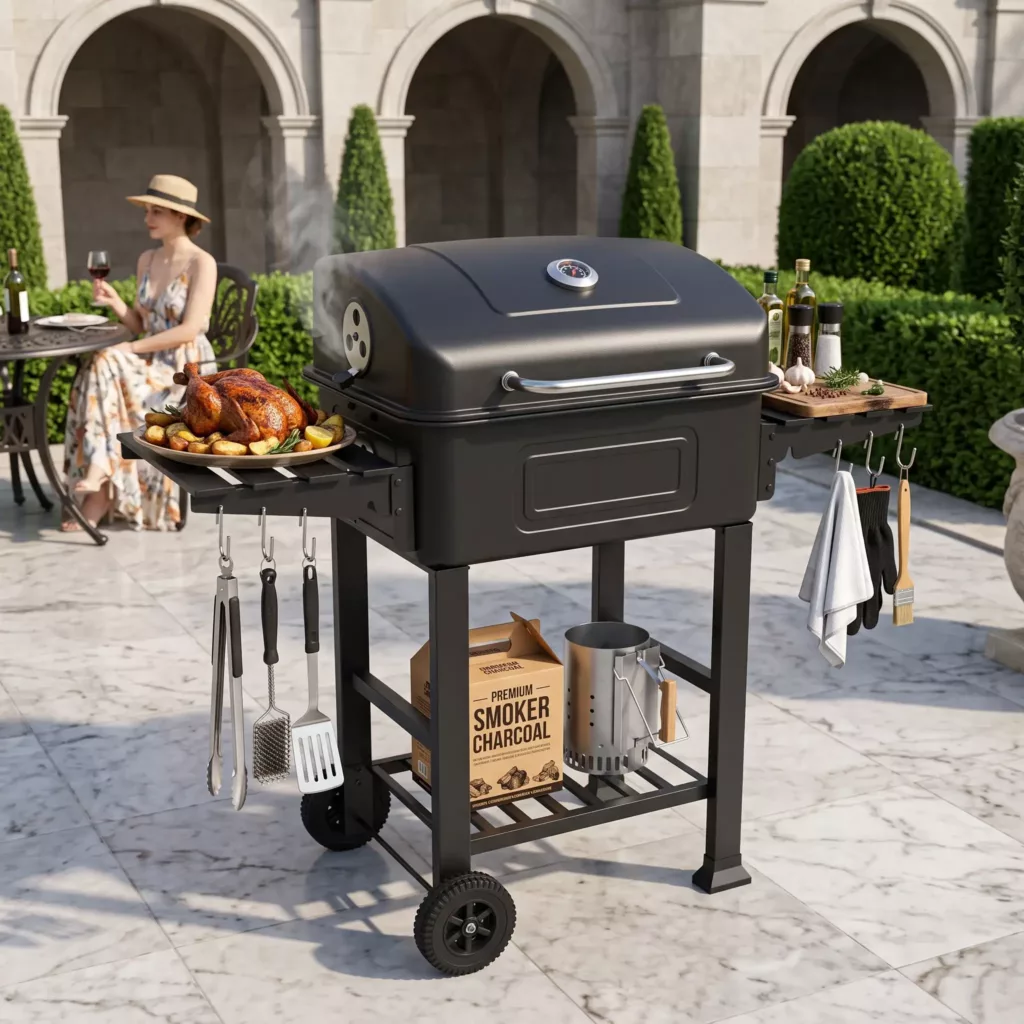
The phrase “stainless steel grill” is way too vague for a smart buyer guide. You must ask exactly which parts feature this metal. Check if it covers the cooking grate, top lid, fire burners, drip pan, screws, side tables, or the whole main cart. Next, ask for the exact alloy grade and metal thickness. Then request the grade, thickness, surface finish, and joining method for each relevant part.
The main cooking grate requires a good balance. It must drop food easily, move heat fast, wash up quickly, and resist warping. A stainless grate can be a sensible choice for frequent washing, but a heavy cast-iron grate may better suit a buyer who prioritizes thermal mass. For the body, a stainless panel can reduce exposed-surface corrosion, while a coated steel structure may meet the same use case at a different price point.
Weld quality deserves equal attention. Buyers should check finished surfaces for smoothness, sharp edges, and visible defects and confirm the applicable inspection requirements for the selected model. KEYO BBQ’s welding process is designed to keep grill surfaces smooth and free from defects that could cause harm.
Treat Coatings as a System
Coating is not a cosmetic afterthought. It is a protective system that depends on the steel substrate, preparation, application, curing, edge coverage, and packaging. Black enamel can provide a durable, heat-resistant exterior when the complete process is controlled; KEYO BBQ’s black enamel heat resistance above 1,000 degrees Celsius. Buyers should still ask for the tested temperature range and the specific component to which the claim applies.
Powder coating may suit frames, shelves, and exterior panels where appearance and corrosion protection matter. It should not be treated as interchangeable with a food-contact surface.
Check Heat, Safety, and Compliance Evidence
Material selection must connect to product testing. Ask how the finished model is checked for stability, sharp edges, ignition, heat performance, and food-contact safety. A material certificate alone does not prove that a complete grill is safe or compliant.
For markets using European grill requirements, EN 1860-1 may be relevant to charcoal grill designs. Food-contact components may require LFGB or FDA-related documentation, depending on the market and claim scope. KEYO BBQ lists EN 1860, LFGB, FDA, CE, and other compliance support. Confirm the exact model, component, test report, issuing body, and validity before using any certificate in a product listing.
Build a Supplier Verification Checklist

Structure the RFQ
Use the same questions with every shortlisted manufacturer. This makes price comparisons more meaningful and exposes hidden differences in material and process. We can help structure the RFQ.
1. Define the body, grate, burner, tray, fastener, and handle materials separately.
2. Record grade, thickness, finish, coating, and tolerance for each critical part.
3. Request a production sample or first-article approval before mass production.
4. Confirm welding, edge finishing, assembly, ignition, leak, and heat-performance checks.
5. Match test documents to the exact model and destination market.
6. Ask how scratches, coating damage, replacement parts, and packaging are controlled.
7. Review tooling, customization, minimum order quantity, lead time, and inspection access.
An OEM or ODM partner should translate these points into drawings, samples, packaging, and a controlled production plan. KEYO BBQ supports design, tooling, customization, manufacturing, quality control, packaging, and logistics in one service flow. That matters when changing material affects dimensions, weight, carton design, or certification documents.
Select the Material Mix for the Market
There is no universal winner among iron, cold-rolled steel, stainless steel, enamel-coated steel, and cast iron. The right material depends on the component, product design, intended use, durability requirements, maintenance expectations, and target market. Stainless steel can provide corrosion resistance and easy cleaning, while cast iron offers strong heat retention and even heat distribution. Cold-rolled or enamel-coated steel can provide durable structural solutions depending on the grill design and finish requirements.
For retail programs, the material mix should also fit shelf price, shipping weight, assembly time, spare-part strategy, and customer instructions. A clear specification prevents a supplier from substituting a cheaper grade or coating after quotation. It also gives marketing and compliance teams a defensible description of what the customer is actually buying.
FAQ
Q: Are stainless steel grills better than coated steel grills?
A: Stainless steel grills can offer strong corrosion resistance and easy cleaning, but “better” depends on the application. Coated steel may provide the needed stiffness, appearance, and heat resistance at a different cost. Compare the stainless grade, coating process, weld quality, thickness, maintenance conditions, and test evidence for the exact model before deciding.
Q: How do I verify material quality in stainless steel grills?
A: Request the material grade, thickness, finish, supplier documentation, and a production sample. Inspect weld smoothness, edges, distortion, surface defects, and component fit. Confirm that any food-contact or compliance document names the same model and component. Independent inspection or an agreed first-article approval adds control before the full order is released.
Q: Does the material of grill affect food safety?
A: Yes. Cooking surfaces, grease paths, coatings, welds, and fasteners must be suitable for their intended contact and cleaning conditions. Ask for food-contact evidence where required by the destination market, and confirm that coatings are used only on appropriate components. Product-level tests and inspections matter because a raw material certificate does not cover the complete assembled grill.