
How to Choose a Gas Grill for Your Market: Types, Burners, Materials, and OEM Options
Choosing a gas grill is not only a question of price or burner count. The right product must match the user’s cooking habits, available space, serving capacity, preferred fuel, and maintenance expectations. For importers, retailers, and private-label brands, the choice also affects packaging, certification, positioning, and after-sales support.
When looking for information to create a buying guide for gas grills for import, for sale at a retail store, or for a private label product, the first consideration is the intended market. For example, a two-burner model would be ideal for an urban patio, while a four-burner model on a cart would be perfect for family barbecues. A flat-top griddle is used for a different type of cooking and would be recommended to someone who cooks in that way. A gas grill with charcoal would be for people who want the flexibility of using two different fuels, thus being targeted at a different market than other grills.
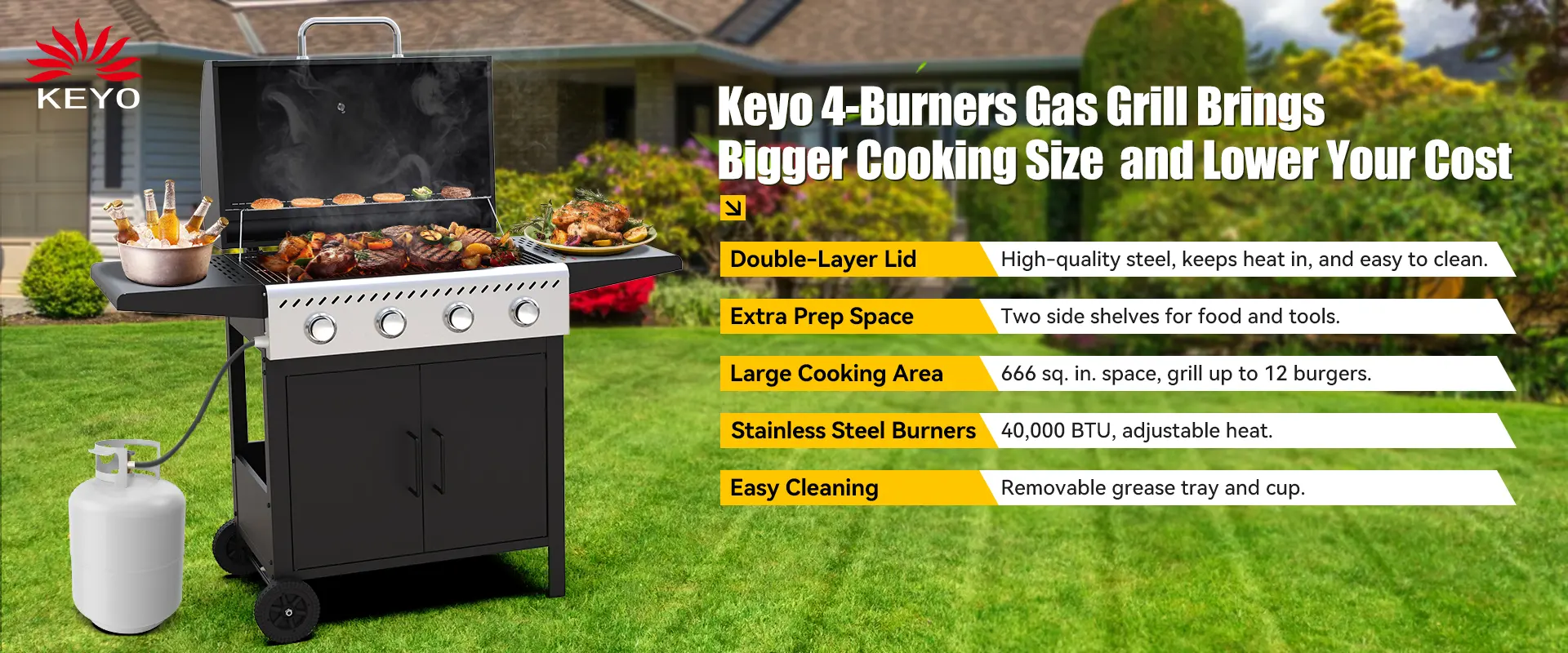
Start With the Cooking Scenario
Before comparing models, define where the grill will be used and what the customer expects to cook:
- How much outdoor and storage space is available?
- How many people will normally be served?
- Does the user need separate heat zones?
- Is portability more important than preparation space?
- Is the product positioned as entry-level, family, or multifunctional?
Compare Gas Grill Formats Before Specifications
Different formats solve different customer problems.
| Format | Best suited to | Main buying consideration |
| Two-burner cart grill | Small patios and households | Footprint, mobility, cooking area |
| Four-burner cart grill | Family meals and entertaining | Heat zones, storage, workflow |
| Flat-top gas griddle | Breakfast foods, vegetables, and burgers | Plate size, grease collection |
| Gas-and-charcoal combo | Customers seeking two fuel options | Footprint, controls, maintenance |
Small Patios and Compact Outdoor Areas
For limited spaces, exterior dimensions and mobility deserve as much attention as the cooking area. A two-burner grill can provide controlled cooking without the footprint of a larger cart.
The KEYO BBQ model QL01-026 measures 109.5 × 56 × 101.5 cm and provides a 50 × 35.5 cm cooking area. Its two-burner layout is suitable for smaller gatherings, while the wheeled structure supports easier repositioning. This format can fit a retail range aimed at patio users who want gas convenience without four cooking zones.
Family Cooking and Outdoor Entertaining
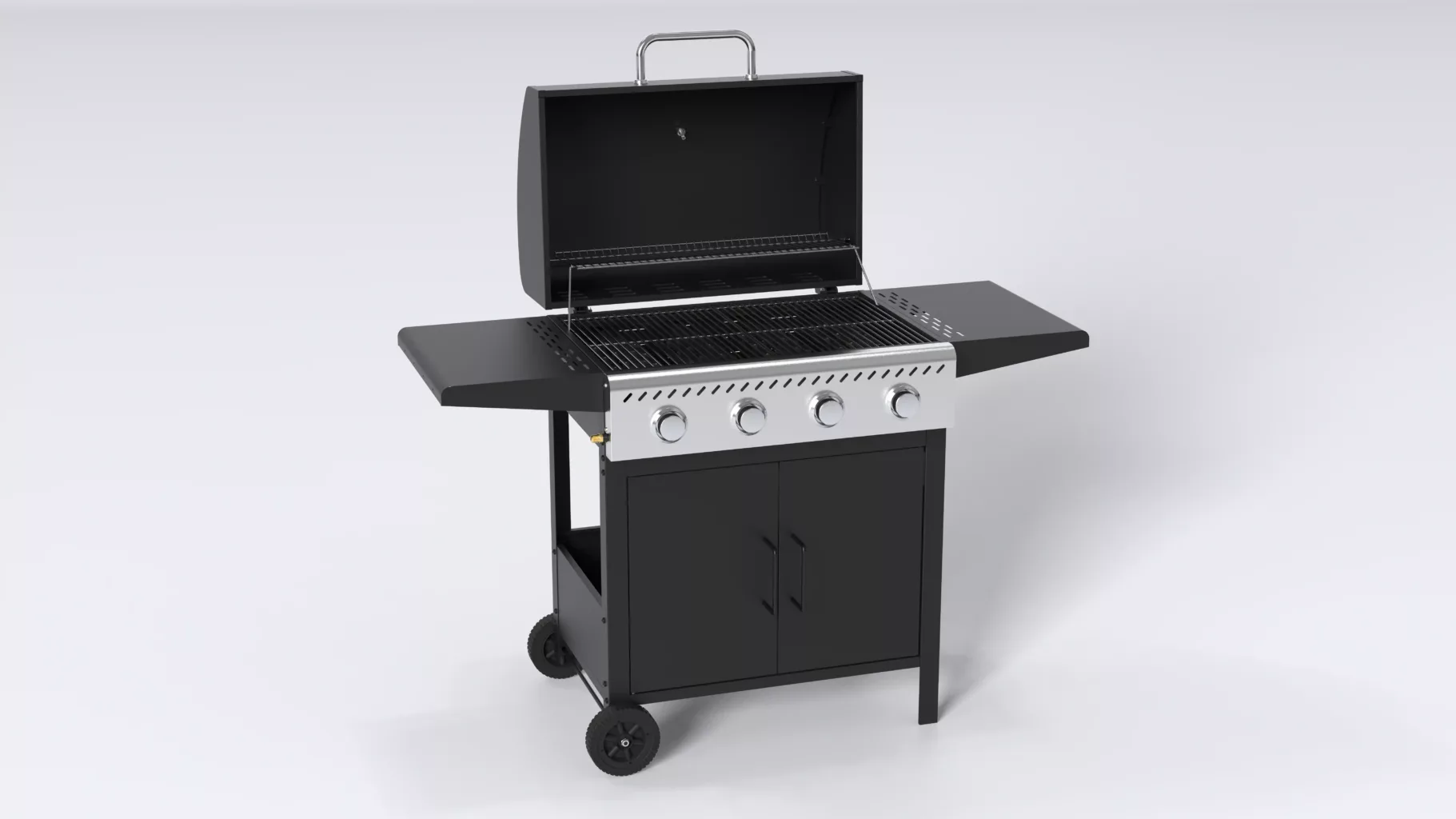
KEYO BBQ QL02-012 is a four-burner propane grill measuring 138 × 65 × 110 cm, with a 68 × 44 cm cooking area and an 86 cm cooking height. The burners can be controlled independently. The model also includes a built-in temperature gauge, a stainless steel cool-touch handle, a lower storage cabinet, and wheels.
Flat-Top Griddles for a Different Cooking Routine
A griddle replaces open grates with a flat surface, making the griddle suitable for eggs, pancakes, chopped vegetables, burgers, and smaller items.
Model QL01-029 measures 46.5 × 50.5 × 23 cm and has a 48 × 36.5 cm cooking area. The model uses two 2.4 kW burners, with a total rated output of 4.8 kW, and includes a side waste-oil collector.
Combination Grills for Broader Positioning
A gas-and-charcoal combination grill requires more space, but the grill can create a clear point of difference.
Model QL02-005 measures 196 × 64 × 130 cm and has a 102 × 44 cm cooking area. The features include a 3+1 burner system, two chimneys, a lid thermometer, a heat-resistant handle, an ash catcher, an adjustable-height charcoal tray, a warming rack, and base storage.
Match Burner Count to Cooking Zones
Burner count should be considered together with cooking-area dimensions and layout. More burners can create more temperature zones, but the burners also increase size.
Two Burners Versus Four Burners
A two-burner gas BBQ may support direct cooking on one side and lower heat on the other, depending on the design and food load. The two-burner gas BBQ is generally easier to position for smaller households.
A four-burner model provides more independent zones. Users can cook foods at different heat levels or leave an area unlit for indirect cooking. Retailers should base the choice on customer needs and target price, not the assumption that more burners are always better.
A 3+1 configuration is different from four main burners. The configuration normally combines three primary burners with an additional side burner. Buyers should confirm whether customers value extra main-grate control or a separate station for cookware.
Do Not Judge Performance by One Number
Burner output does not describe the complete cooking system. Heat distribution also depends on burner arrangement, firebox dimensions, lid design, flame-to-surface distance, and zone control.
When comparing samples, test ignition, low-flame stability, temperature recovery after opening the lid, surface consistency, and grease drainage. These observations can be more useful than one headline specification.
Evaluate Construction, Maintenance, and Supply Risk
A strong specification should cover the parts users touch, clean, move, and rely on repeatedly: the body, lid, burners, cooking surface, handles, wheels, storage, grease system, fasteners, and assembly instructions.
At KEYO BBQ, production uses cold-rolled steel, enamel coatings, and stainless steel components according to product requirements. Gas and combination grills undergo ignition testing, gas-leak detection, and heat-performance testing before shipment. KEYO BBQ also provides spare parts and after-sales support.
Wholesale buyers should confirm:
- Final dimensions, cooking area, and burner configuration
- Fuel and regulator requirements for the destination market
- Material, coating, and food-contact specifications
- Required certifications and inspection needs
- Logo, color, carton, manual, and labeling
- Assembly checks and replacement-part planning
- Sample approval, schedule, and shipment terms
Certification must be matched to the market and model. The available compliance framework includes CE and LFGB, while selected products can be prepared with certifications such as CSA or AGA for relevant markets.
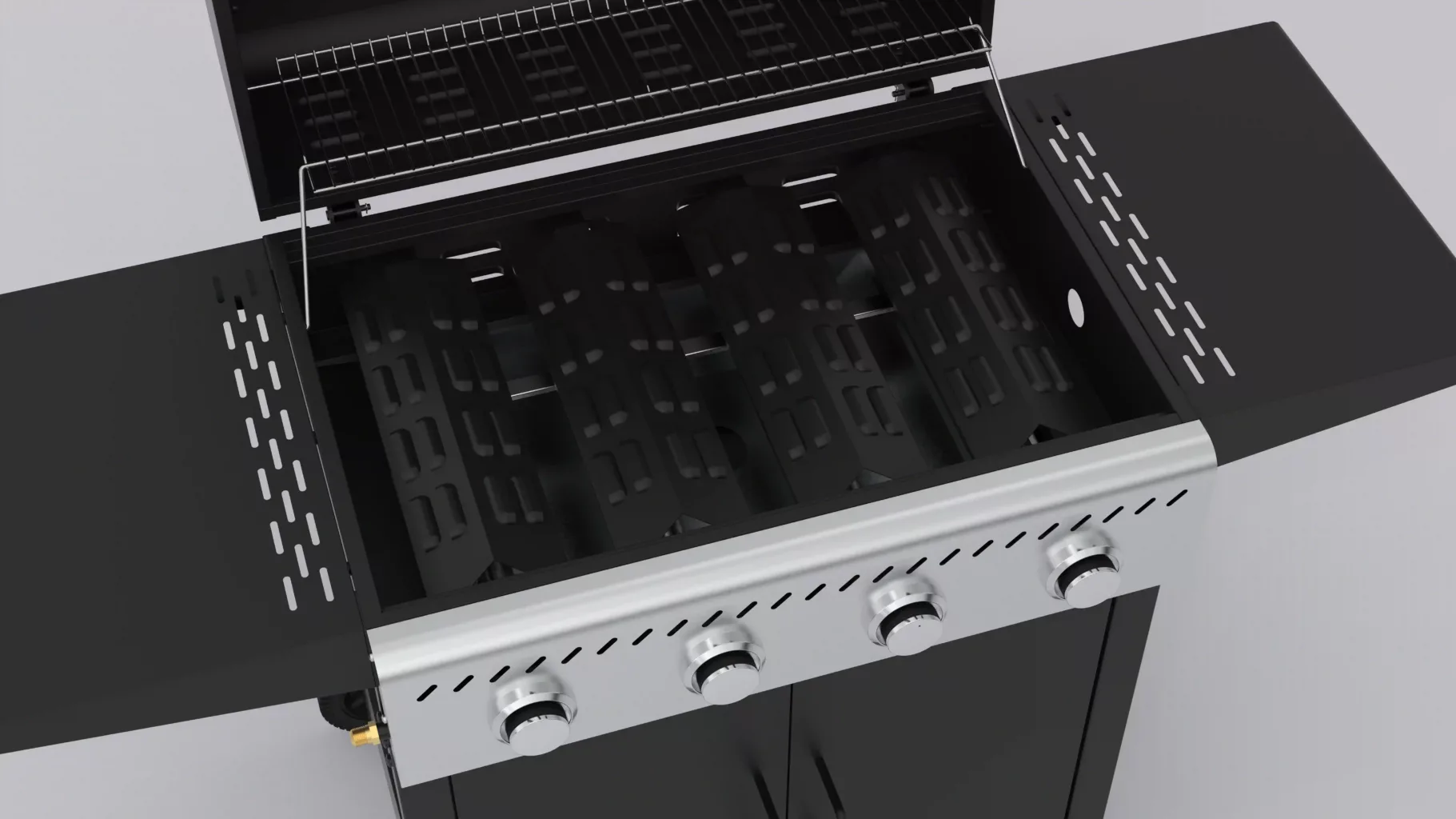
From Product Selection to a Market-Ready Range
Consider a distributor building a three-level seasonal assortment. The entry level could use QL01-026 for customers with less space. The family tier could use QL02-012 for buyers seeking four independently controlled burners, storage, and mobility. A specialty tier could add QL01-029 as a compact griddle or QL02-005 as a dual-fuel product.
The lesson is simple: each SKU needs a distinct customer, price role, and selling story. Adding similar grills without clear differentiation makes purchasing, marketing, and inventory planning harder.
As a BBQ wholesale supplier, KEYO BBQ supports OEM and ODM projects from product development and customization through manufacturing, quality control, packaging, and logistics. The services include logo printing, structural adjustments, and packaging design. When requesting a quotation, share the target market, preferred model or dimensions, burner layout, certification needs, quantity, packaging goals, and launch date. A clear brief allows us to recommend a suitable production path.
FAQ
Q: Is a 3+1 burner grill the same as a four-burner grill?
A: No. A 3+1 layout generally means three main burners plus one side burner. A four-burner grill usually places all four burners under the primary cooking surface.
Q: What is the advantage of a flat-top gas griddle?
A: The solid plate handles eggs, pancakes, chopped vegetables, burgers, and other small foods without gaps. A grease collector also makes routine cleaning more manageable.
Q: What should importers ask an OEM gas grill manufacturer?
A: Ask about model specifications, fuel components, testing, certifications, MOQ, sample approval, customization, packaging, production timing, inspections, spare parts, and after-sales procedures.