
How to Clean Your Grill Properly: Step-by-Step Cleaning Tips
The correct method is simple: first of all, switch off the fuel or electricity to the grill. Then remove all the bits and pieces to loosen up any residue. Clean the grates, remove any grease or ash from the walls and floor of the grill, wash any parts that can be washed with water and oil, dry all the parts, and then reassemble the whole thing. You can find more detailed steps and important notes in the following article.
Why Does Proper Grill Cleaning Matter?
Grease fires can produce excess smoke and flames with very foul tastes. Ash can hold moisture against the metal surfaces of your stove/oven. Vents can become blocked and decrease your ability to control combustion. On gas stoves/ovens, dirty burner ports can produce poor-quality, uneven flames, often producing cold spots.
Cleaning as part of performance maintenance. Cleaning the firebox after every meal is not intended to polish the entire firebox. Rather, to clean food-contact surfaces, to prevent heavy soiling, to maintain clear passages, and to identify corrosion or damage to parts before they become serious problems.
What Tools and Safety Steps Do You Need Before Cleaning a Grill?
Which Grill Cleaning Tools Should You Prepare?
Prepare a small kit before starting:
- Heat-resistant gloves
- Warm water and mild dish soap
- A bristle-free grill brush or suitable nylon brush
- A non-abrasive sponge and plastic scraper
- Microfiber cloths or paper towels
- A container for removable parts
- Cooking oil for cast iron grates
Select tools to match the surface, and different materials require different precautions. Porcelain-coated grates can be damaged by harsh scraping. Stainless steel should be wiped in the direction of the brush stroke. Cast-iron grates should not be left wet for long periods and should not be submerged in water.
How Do You Shut Down a Gas, Charcoal, or Electric Grill Safely?
Follow the shutdown method for the fuel type:
- Gas grill: Turn off all burners and close the gas supply.
- Charcoal grill: Allow charcoal and ash to cool completely before emptying the firebox.
- Electric grill: Unplug your electric grill and keep plugs, controls and connections dry.
Wait until all parts are free before you remove grates, shields, trays, and pans.
Never clean up any flotsam or debris near a live flame, hot charcoal, or live electrical components – check the manual for details on disassembling or removing any fixed / connected items.
How Do You Clean a Grill Step by Step?
Step 1: Loosen Burned-On Food and Grease
A brief warm-up could be used to soften grease and make food matter scrapeable. It is important to turn off the heat before brushing and avoid using an extended high-temperature burn to try to clean.
Never assume that a burn-off cycle is suitable for electric equipment. Different cooking surfaces and different types of cooking surface finishes may require lower temperatures and different tools.
Step 2: Clean the Grill Grates Without Damaging Them
Remove any loose material from both sides of grates. Clean removable grates with warm soapy water if safe to do so. Rinse and allow to dry.
Use the following material-specific approach:
- Cast iron: Brush occasionally. Dry and rub with a small amount of cooking oil after cleaning.
- Stainless steel: Use a non-abrasive pad and wipe in the direction of the steel’s grain.
- Porcelain-coated steel: avoid sharp scrapers and heavy pressure.
Avoid leaving soap, metal fragments, or loose carbon on the cooking surface. Inspect the grate for deep rust, cracks, or flaking coating prior to reinstallation.
Step 3: Remove Grease, Ash, and Debris From the Grill Interior
Clear out loose carbon from the firebox. Gas appliances will need to have grease cleaned from the grease tray, heat shields, around the burners, and the bottom of the cookbox. Be careful not to force debris down into the burner holes. Charcoal grills will need to have cold ash emptied out, as well as the fire bowl and vents cleaned. Electric grills will have a drip or grease tray that needs to be cleaned. Be sure to never get any part of the electrical system wet.
A dirty grate after several rounds of grilling up burgers for dinner could have old rendered fat in the valleys of the grates. Cleaning the surface does not necessarily clean fat from the bottom of the grates. That fat can then smoke or flare up when next grilling at high heat.
Step 4: Clean the Lid, Exterior, Trays, and Removable Parts
Clean the lid, handles, side shelves, control knobs, the cabinet surfaces, and wheels with mild detergent and a soft cloth. Wash any removable trays separately, as grease on these will get washed across the body of the grill in washing.
Use of strong oven cleaners should be avoided unless specifically approved by the manufacturer. Various surfaces such as painted steel, enamel, stainless steel, and plastic can react differently to some of the stronger cleaners. Also, avoid pouring any of the liquid cleaners around the thermometers and control panels, and spray from as far as possible to avoid spillage.
Step 5: Dry, Protect, Reassemble, and Test the Grill
Dry all parts before reassembling them. Lightly oil cast iron where required. Do not leave a thick, sticky layer.
Heat shields, burners, grates, ash pans, and grease trays must be reassembled and reconnected properly. For gas grills, gas connections must be made after all parts have been secured. Check that all burners are producing an even flame. For electric grills, ensure that all connectors and controls are dry before reconnecting the grill.
How Does Cleaning Differ Between Gas, Charcoal, and Electric Grills?
| Grill type | Main buildup | Parts needing attention | Main precaution |
| Gas grill | Grease and carbon | Burners, heat shields, cookbox, grease tray | Shut off the gas supply |
| Charcoal grill | Ash, soot, and carbon | Firebowl, ash catcher, vents, charcoal tray | Confirm that all fuel is cold |
| Electric grill | Grease and food residue | Cooking surface, grease tray, heating area | Unplug and keep controls dry |
How Should You Clean Gas Grills?
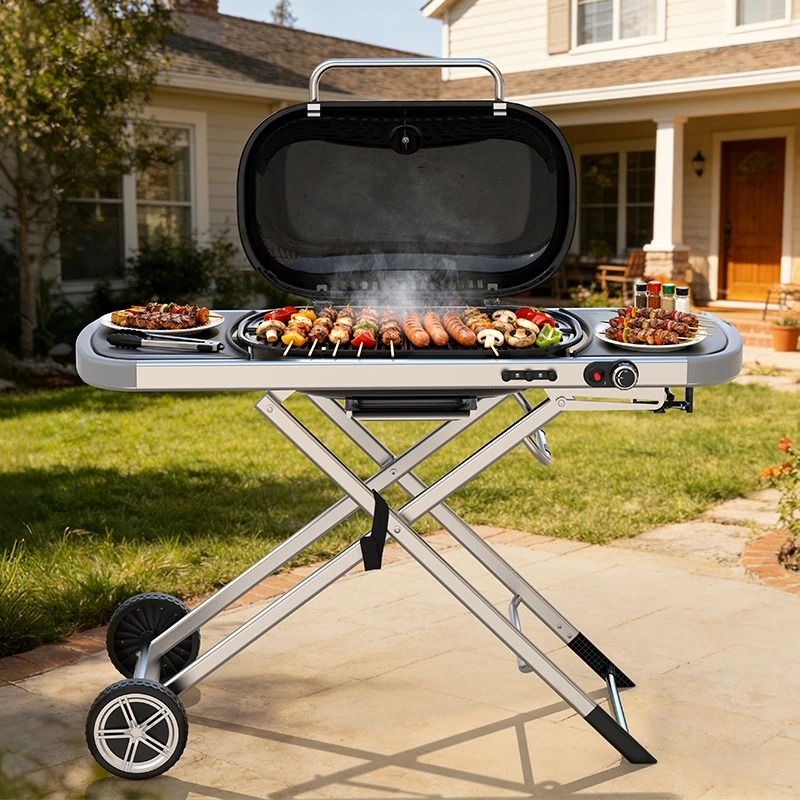
When cleaning gas grills, remember to remove grates and heat shields, use a brush to sweep debris off of burners, BUT NOT INTO PORTS. Carefully clear blocked openings and inspect the ignition system. Empty grease from all grease collection parts.
For example, KEYO BBQ QL02-012 is a 4-burner propane gas grill. When cleaning this large grill, make sure to clean all 4 burner zones equally and not concentrate cleaning in the center.
How Should You Clean Electric Grills?
An electric grill needs stricter moisture control. Its grease collection tray catches drips and should be emptied regularly. Clean the cooking surface with a damp, non-abrasive cloth after cooling, while keeping the plug, rotary control, and heating connections dry.
How Should You Clean Charcoal Grills?
Wait until the fuel is fully extinguished. Remove cold ash, scrape loose deposits from the firebowl, clear the vents, and clean the grate according to its material. Do not leave ash inside during damp weather because it can retain moisture.
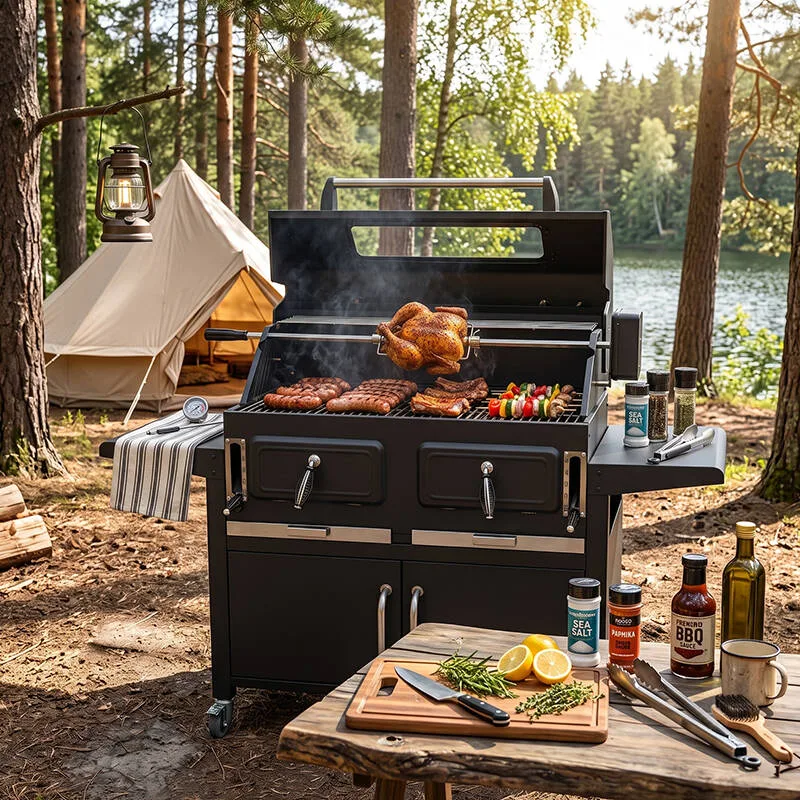
For larger trolley types, the option of access and collection features can save a lot of work, like the FT01-037 metal trolley charcoal grill. The ash catcher can be removed and emptied after cleaning the grill. After cleaning, check that all parts, including the tray and vents, move freely.
How Often Should You Clean Your Grill and Keep It Cleaner Longer?
Use a schedule based on buildup:
- After every cook, brush the grates and remove any excess food.
- Clean firebox, grease tray, ash catcher, vents, and other burner access areas during the season.
- Smoke, flare-ups, uneven heat, or other problems with ignition need to be diagnosed in more detail.
- Before storage: Clean grill. Allow to dry. Protect any exposed areas. Cover. Store in a dry low moisture area.
A grill that is used weekly for greasy foods needs more maintenance than one used from time to time for grilling vegetables. Regularly emptying the waste reservoir and covering the grill when it has cooled down will save a lot of cleaning work in the future.
FAQ
Q: Should you clean a grill before or after cooking?
A: It is best to clean up immediately after the barbecue. And make sure to inspect your grates and remove any loose debris and cleaning materials before your next cook.
Q: Can you use vinegar and baking soda to clean a grill?
A: The solution may remove residue from some of the removable parts but would not be suitable for all of the finishes used on our cookware.
Q: How do you remove rust from grill grates safely?
A: Use the correct tool to remove loose rust from grates, wash off any residue, and dry. Then simply oil lightly grates made of cast iron. Grates with severe corrosion, cracks, or flaking coatings should be replaced.